David Bingham

Twenty-six inventions

A career of creativity, innovation, and invention.

How to read this page

26

inventions

Something new that I helped invent.

33

granted

A filing that became a patent.

51

applications

A filing with the patent office.

GE Digital3 · 2015 – 2016

Software for people who keep industrial machines running

3 inventions from San Ramon, 2015 to 2016: a status grid for a control room, the case structure behind Asset Performance Management, and a design patent on 1 timeline component. [Proposed: These are the ones I would show first, because they are about how people and machines reason together, which is still the question I work on.]

3 inventions
2015 – 2016

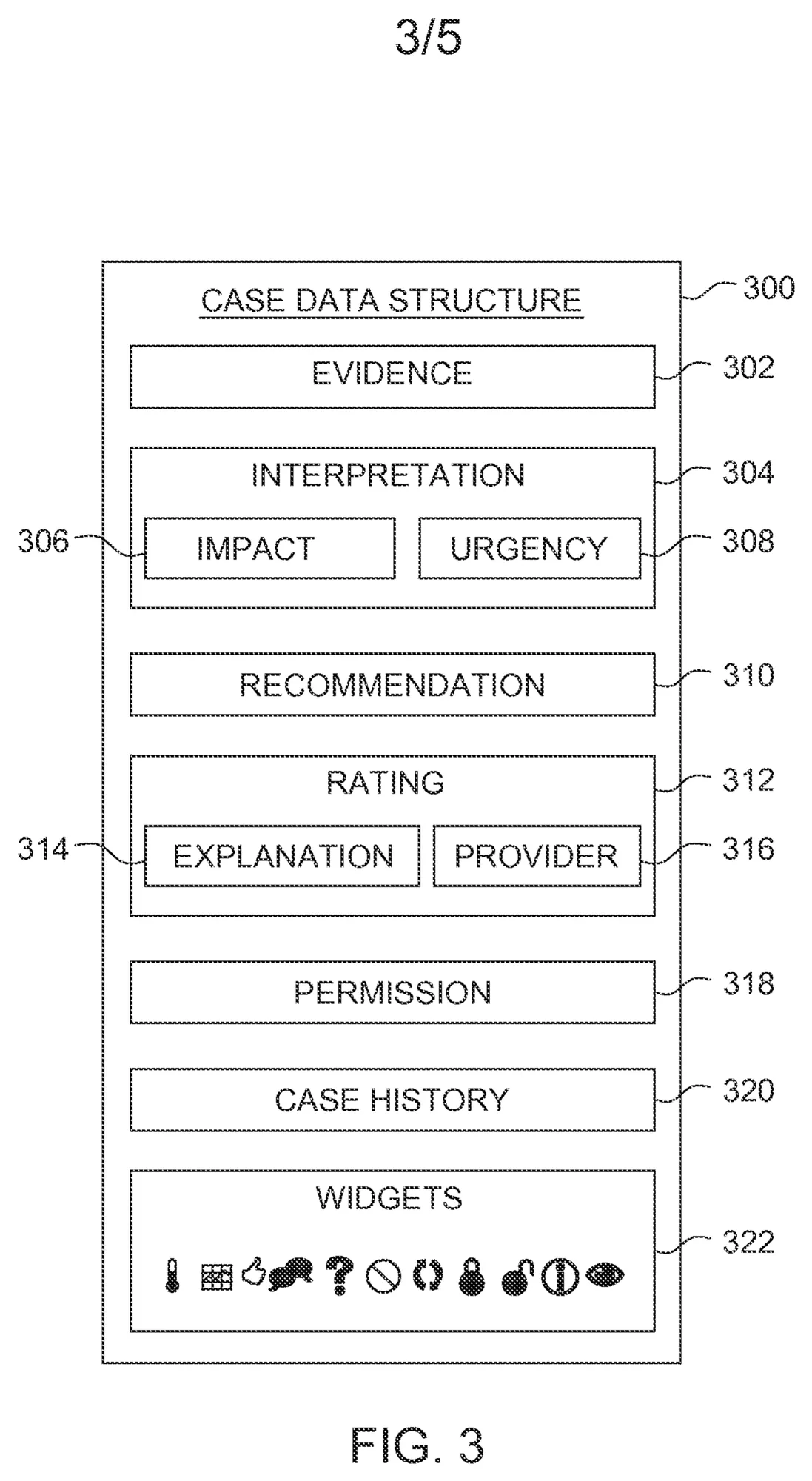
Patent drawing from WO2017048218A1: the case data structure: evidence, interpretation (impact, urgency), recommendation, rating (explanation, provider), permission, case history, widgets
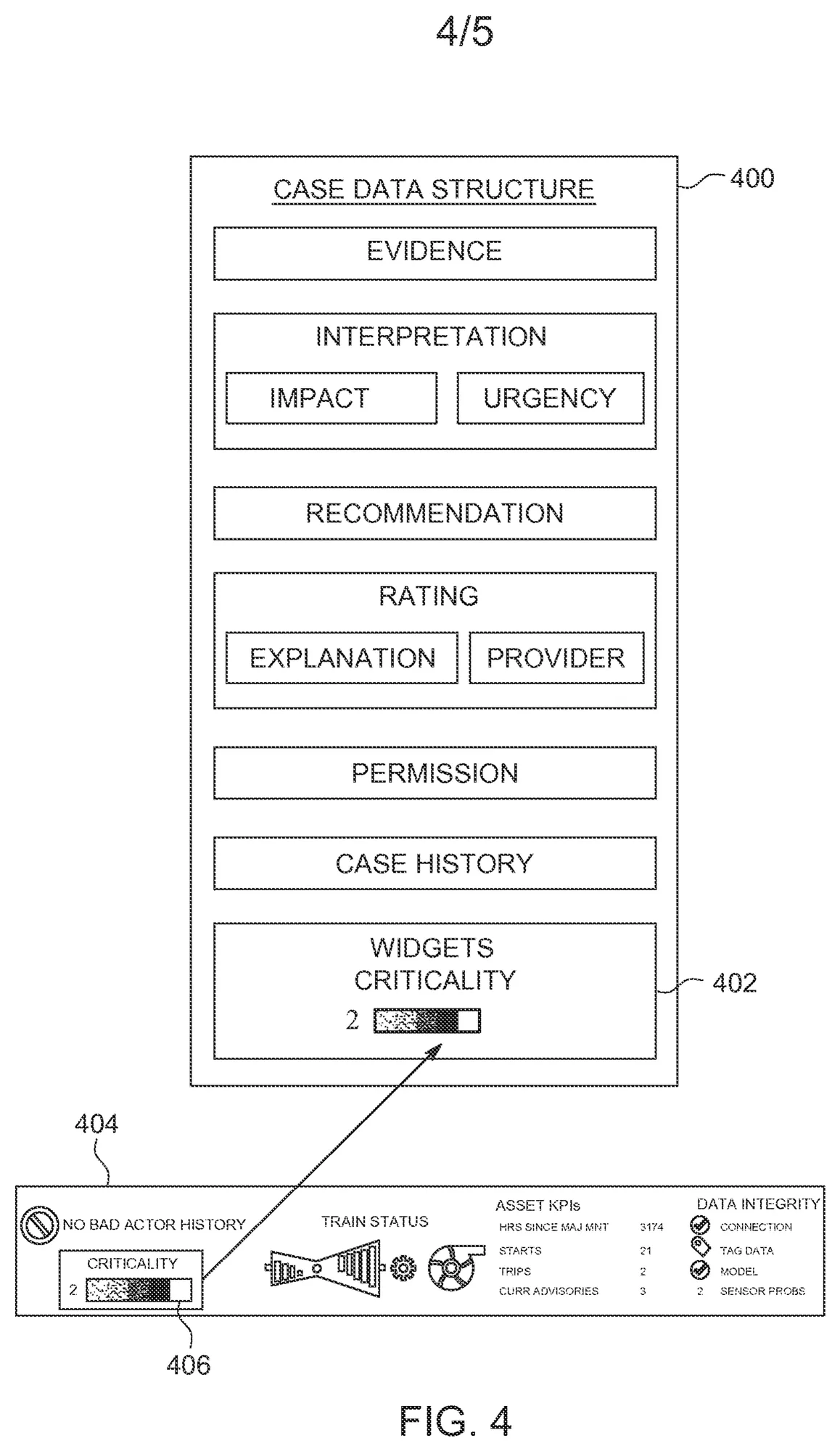
Patent drawing from WO2017048218A1: the same structure bound to a rendered widget strip; criticality field driving the display
The one that matters most

A graphical display associated with a case

WO2017048218A1 · filed September 2015 · two inventors

Its background section names, in 2015, the failure that limits enterprise AI adoption today: analysts cannot later recall the specific information they relied on, and operators who cannot see the reasoning behind a recommendation show non-compliance.

The claims make grounding structural — evidence, interpretation and recommendation are first-class fields bound to a case, not commentary attached afterwards. The interpretation and the recommendation are written at a central monitoring center; they are read at the operating site, by the person who has to act.

Figures 3 and 4 of WO2017048218A1 — the case data structure, with evidence, interpretation and recommendation as fields; and the same structure bound to a strip of widgets.

Why this is the bridge

This is the earliest of four instances of one architecture across eleven years. Everything I have built since about explainability was already structural here.

Continued in Asset Performance Management (2014–2015) and KBOps (2022).

The application

Official title: Method and apparatus for providing a graphical display associated with a case. Filed with David Sean Farrell.

One international application · filed Sep 2015 · published Mar 2017
Singular in the record

Display screen with graphical user interface

USD786299S1 · granted May 2017

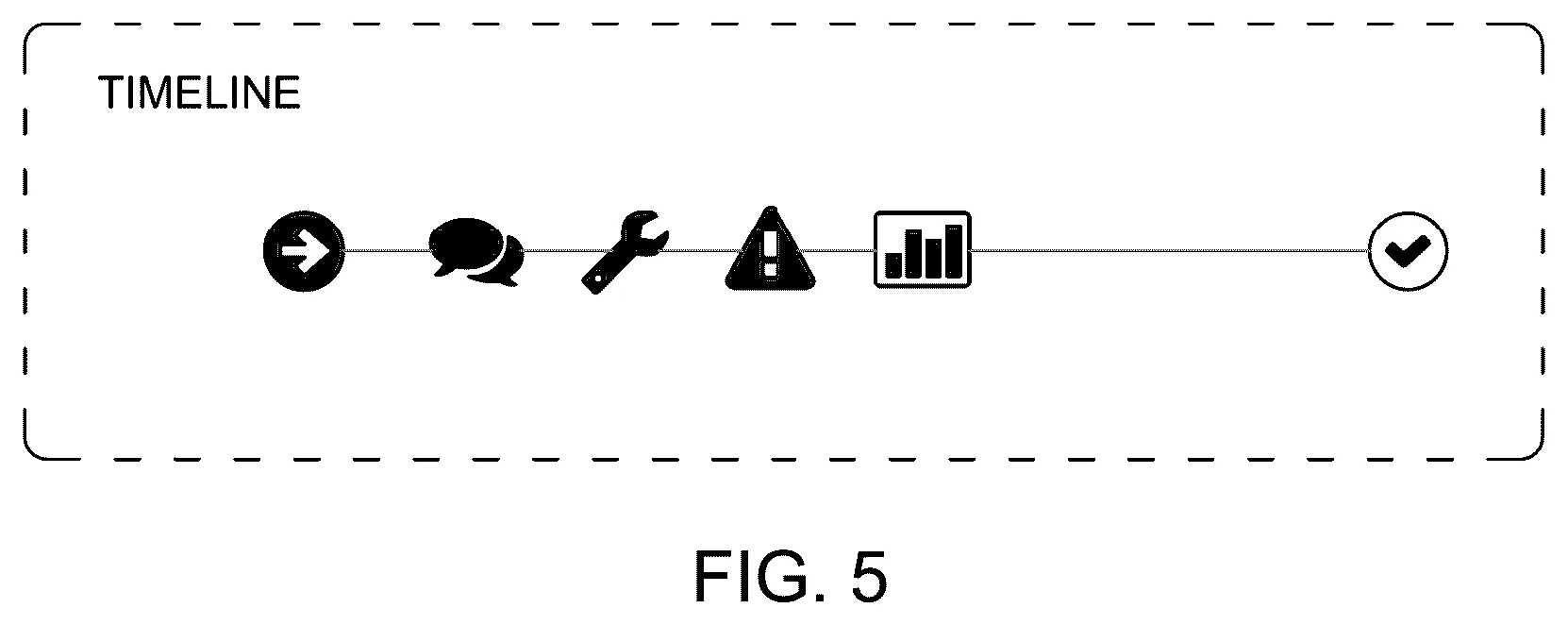
A design patent on one interface component: a case timeline. Five event types — handoff, comment, maintenance, alert, data reading — strung along a rule and ending in a mark for resolution. One claim, five figures.

One application · design patent · 15-year term from May 2017

Why it is singular

Every other filing in the record claims a system that happens to contain an interface. This one claims the interface. In twenty-six inventions it is the only place where the screen itself was the invention.

It is also the same case as the filing above. That one claims the structure of a case; this one claims the component that draws its history. They were filed within weeks of each other in 2015.

Patent drawing from USD786299S1: the complete component: five event types on a rule, captioned TIMELINE, the run terminating in a resolution mark

Figure 5 of USD786299S1, as the patent office published it: the complete component, captioned, with the run ending in a resolution mark. In a design patent the drawings are the whole disclosure.

Monitoring and reporting of industrial equipment status2016Granted, active

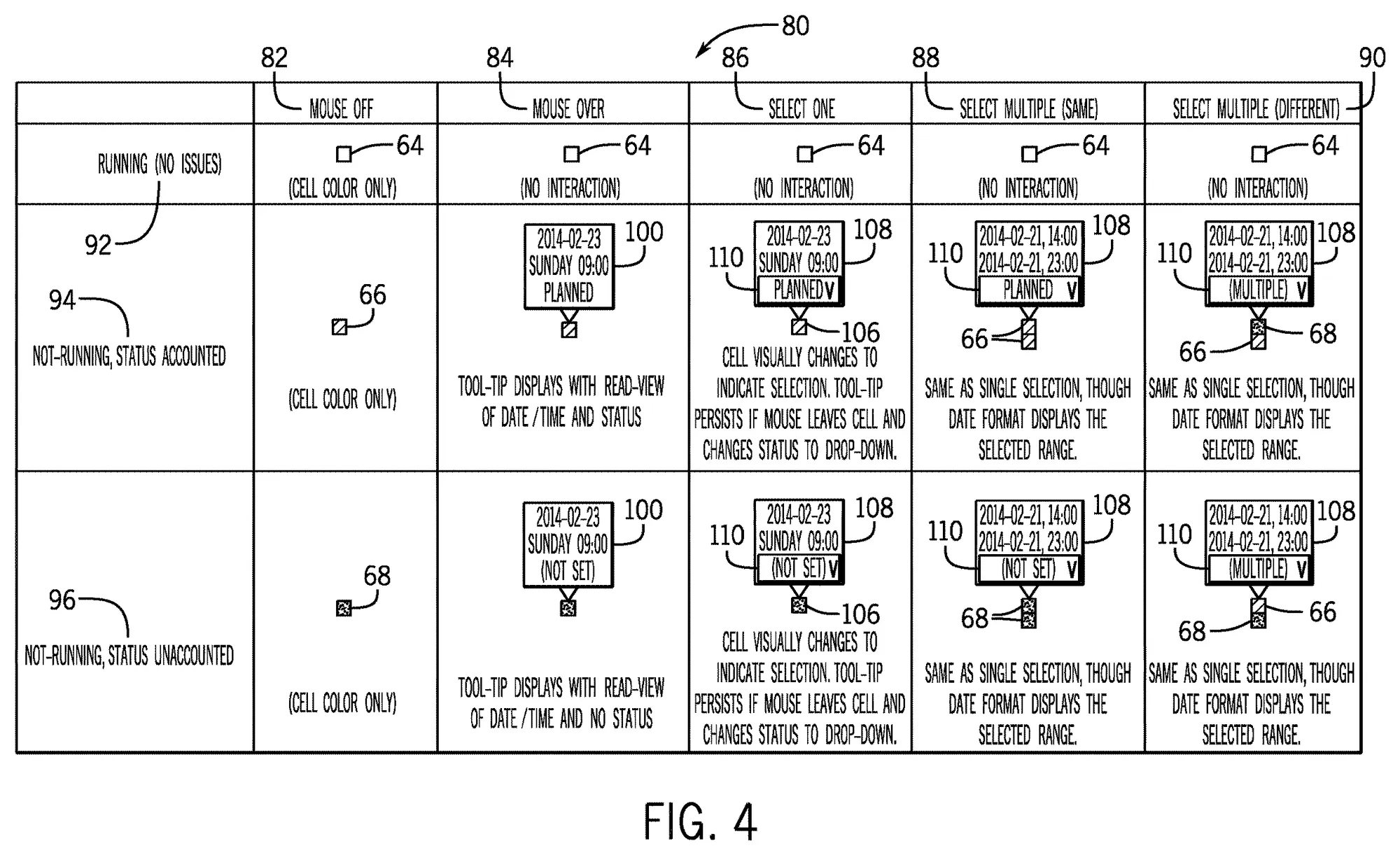
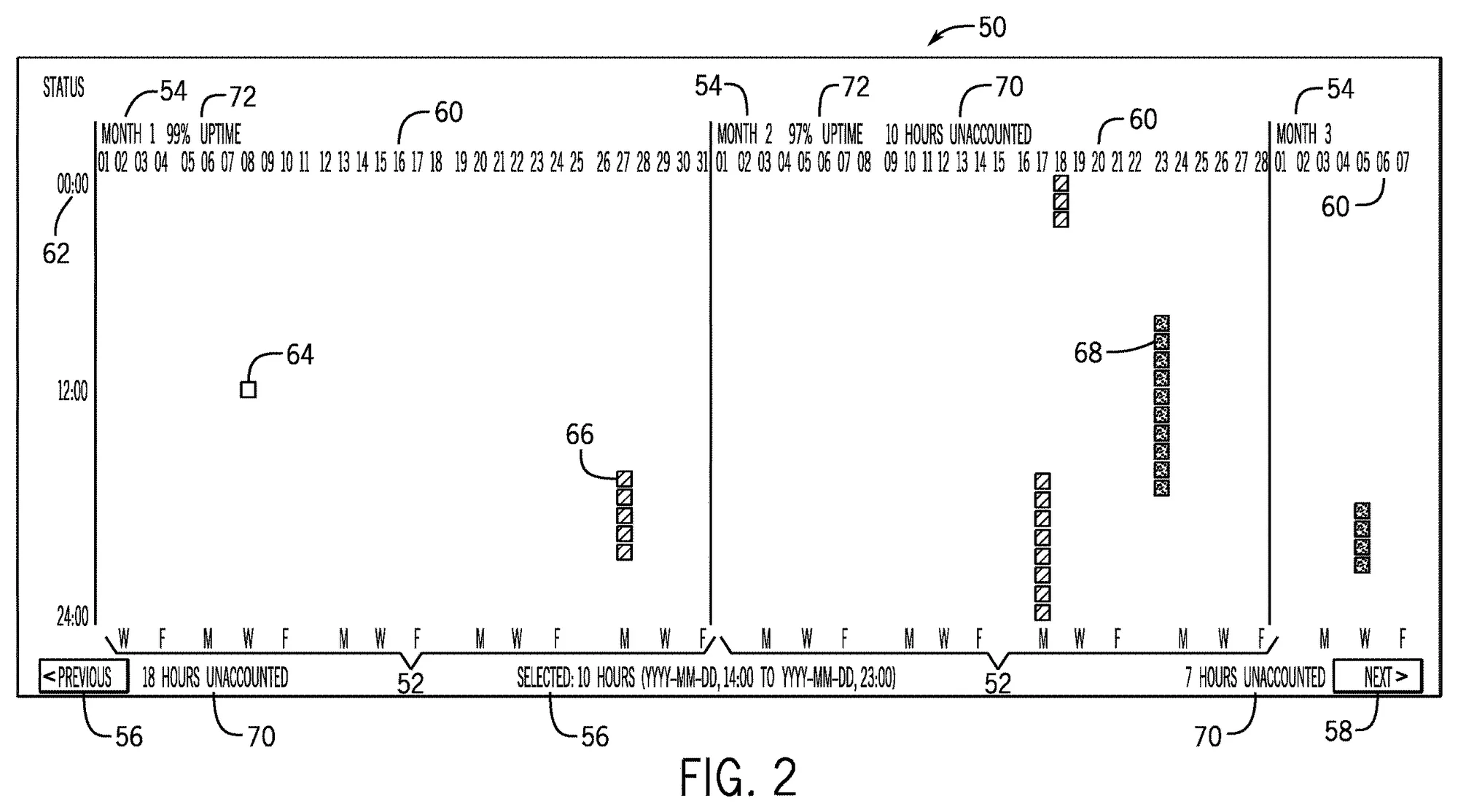
A control room watching hundreds of turbines and engines needs to know which are running, which are down, and why, at a glance. This lays equipment status out as a grid of hours by months, totals uptime and the hours nobody can account for, and specifies what every hover and click shows for every state a machine can be in. [Proposed: The interaction matrix in its figures is the kind of specification I write for build teams, and this is the only filing in the set that puts one on the public record.]

With Christopher James Lyons, Waqas Javed, Ricardo Lucas Bastos Breder.

Patent drawing from US10209706B2: interaction states crossed against equipment states; tooltip and drop-down behaviour specified per cell
FIG. 4, US10209706B2 — interaction states crossed against equipment states; tooltip and drop-down behaviour specified per cell.
Patent drawing from US10209706B2: equipment status as an hour-by-month grid, with uptime and unaccounted-hours summaries
FIG. 2, US10209706B2 — equipment status as an hour-by-month grid, with uptime and unaccounted-hours summaries.
ApplicationFiledGrantedStatusConfirmed by
US10209706B2Jan 2016Feb 2019Granted, active to 2036Read from the document
US11016476B2Feb 2019May 2021Granted, lapsedRead from the document
EP3196724B1Jan 2017Nov 2023Granted, active to 2037Read from the document

GE Appliances23 · 2008 – 2011

Home energy and the smart grid

23 inventions from Louisville, 2008 to 2012, on a connected home that could hear its utility, make and store its own power, and show a family where the money was going. They are grouped by what each one did for the household. [Proposed: I was the first interaction designer at GE Appliances and ran design for the Home Energy program; most of the screens in these filings came through my team.]

23 inventions
2008 – 2011

One box, many networks

6 inventions

6 filings share 1 title and 1 week in February 2010. Together they describe the Home Energy Gateway, a small box that keeps the interface on the phone or laptop the family already owns, which is why it cost a fraction of the energy managers with built-in screens it replaced. The title is shown once; each row shows what its filing adds.

Low cost and flexible energy management system with a scheduling capability2010Granted, active

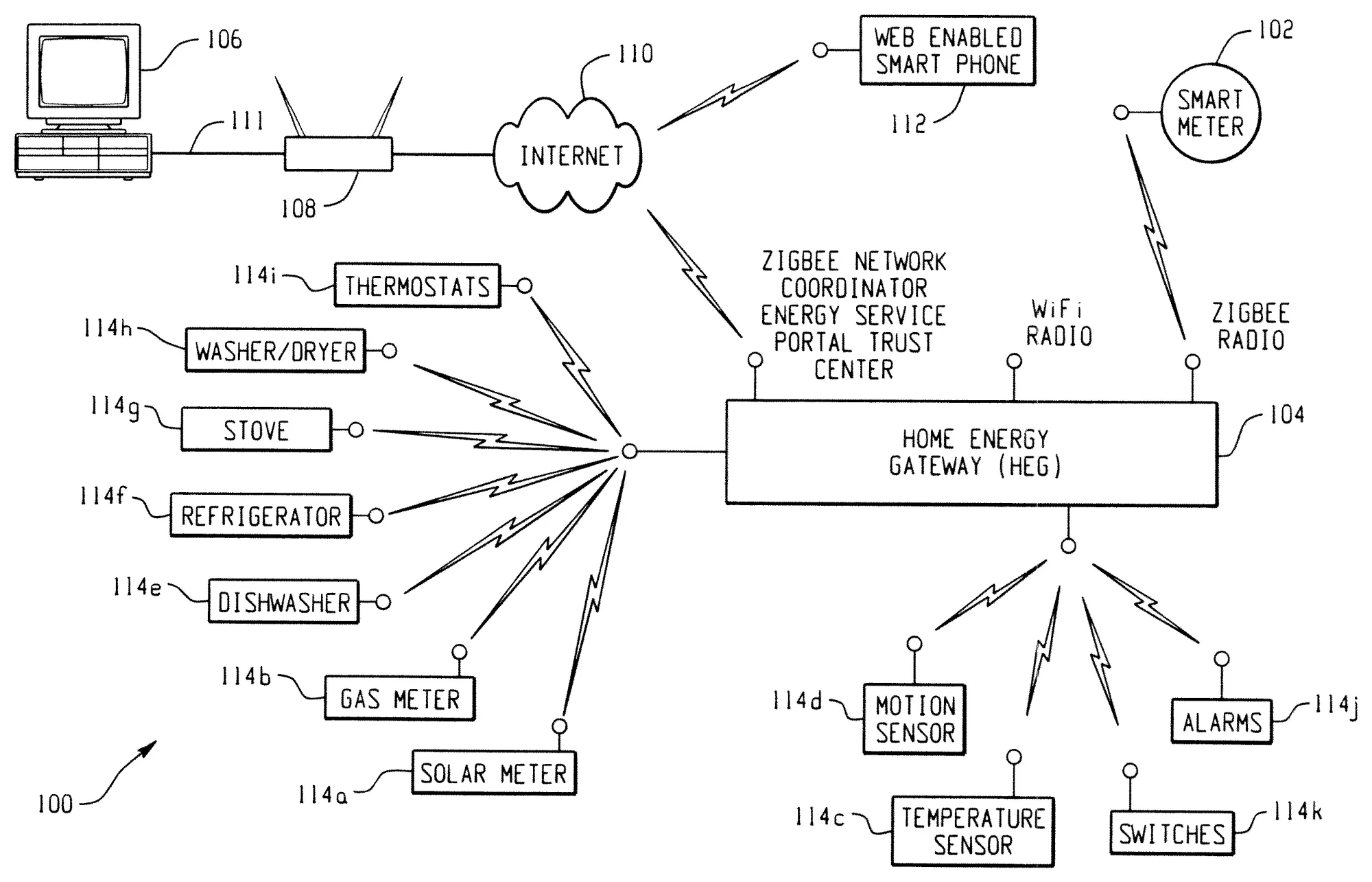
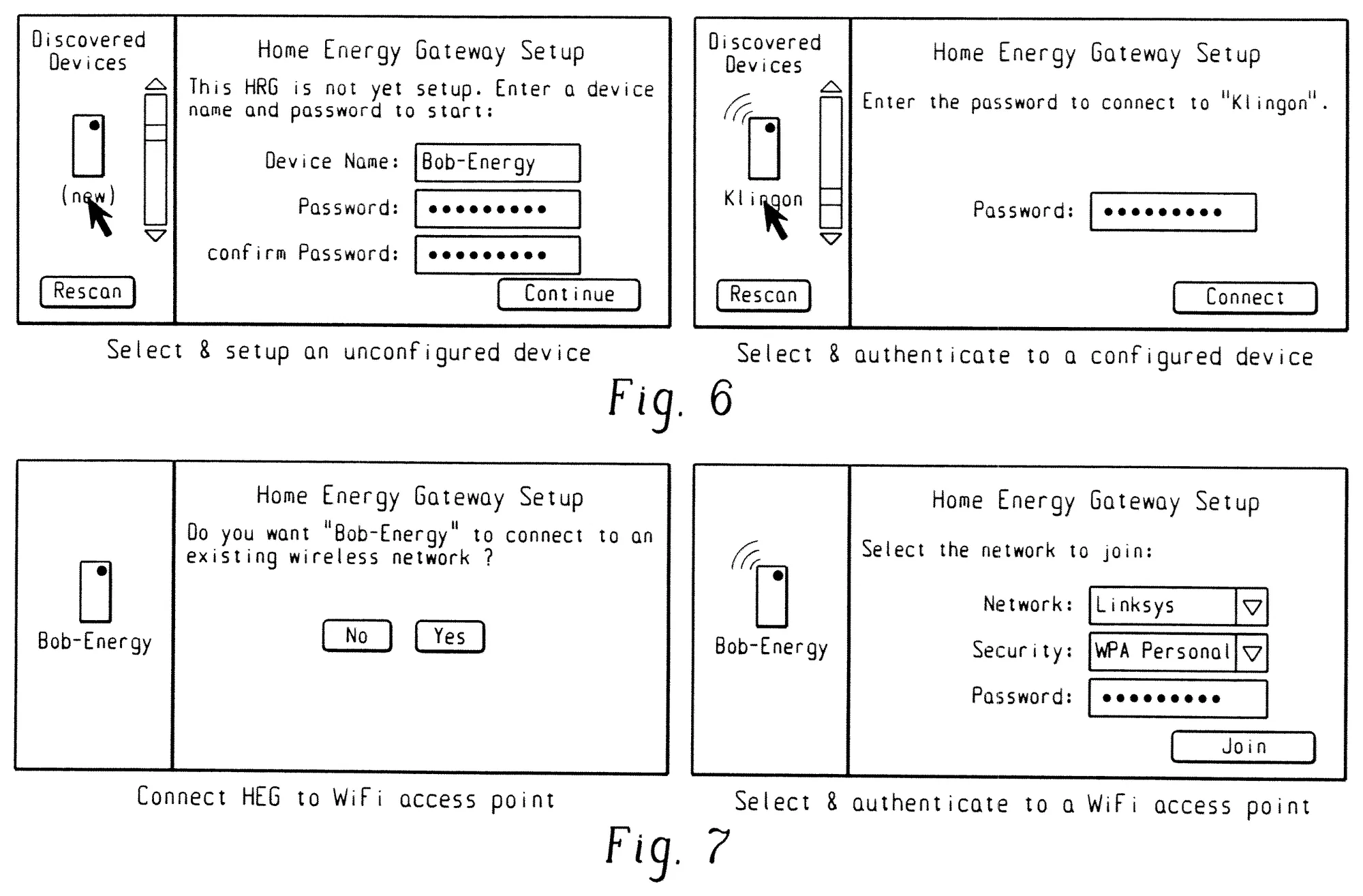
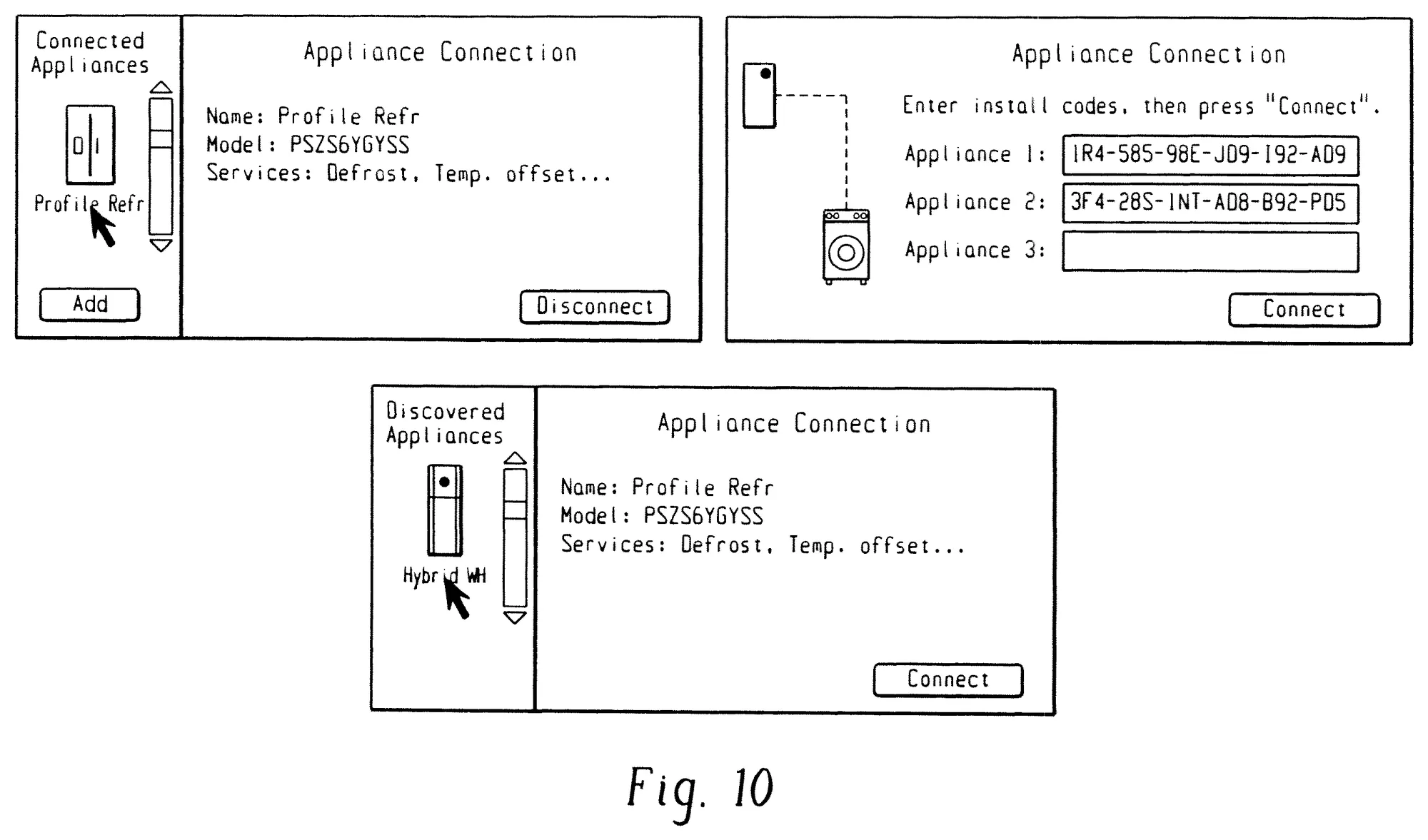
You build the schedule on your phone or laptop, the gateway keeps it, and it reaches the water heater or dryer over whatever network that appliance happens to speak. The setup & pairing screens in its figures are a family's first 10 minutes with the system. [Proposed: I designed the onboarding flow shown here.]

Patent drawing from US8295990B2: the gateway at the centre of a radial home network: meters, thermostats, appliances, phone
FIG. 1, US8295990B2 — the gateway at the centre of a radial home network: meters, thermostats, appliances, phone.
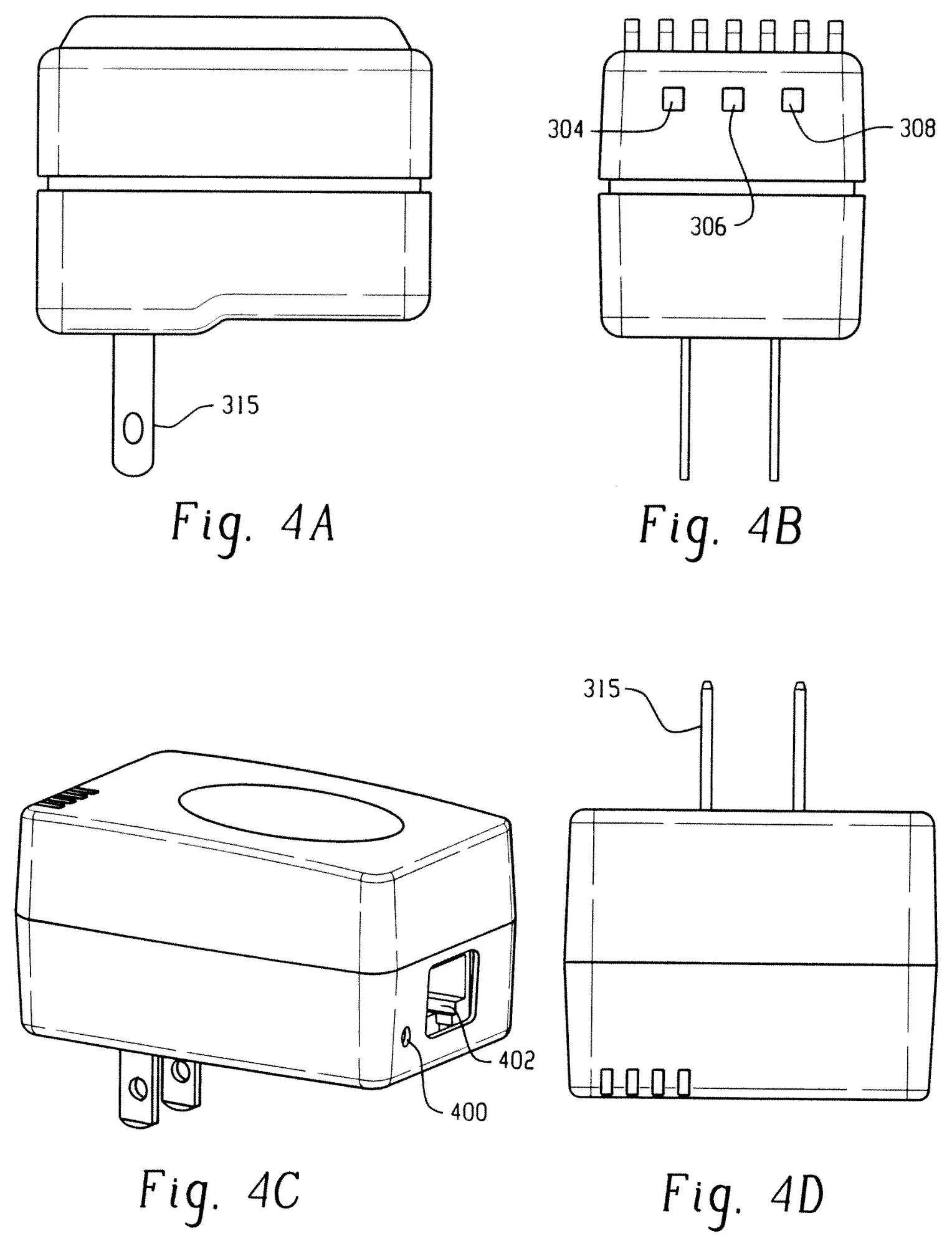
Patent drawing from US8295990B2: orthographic and three-quarter views of the housing
FIGS. 4A–4D, US8295990B2 — orthographic and three-quarter views of the housing.
Patent drawing from US8295990B2: exploded internal assembly
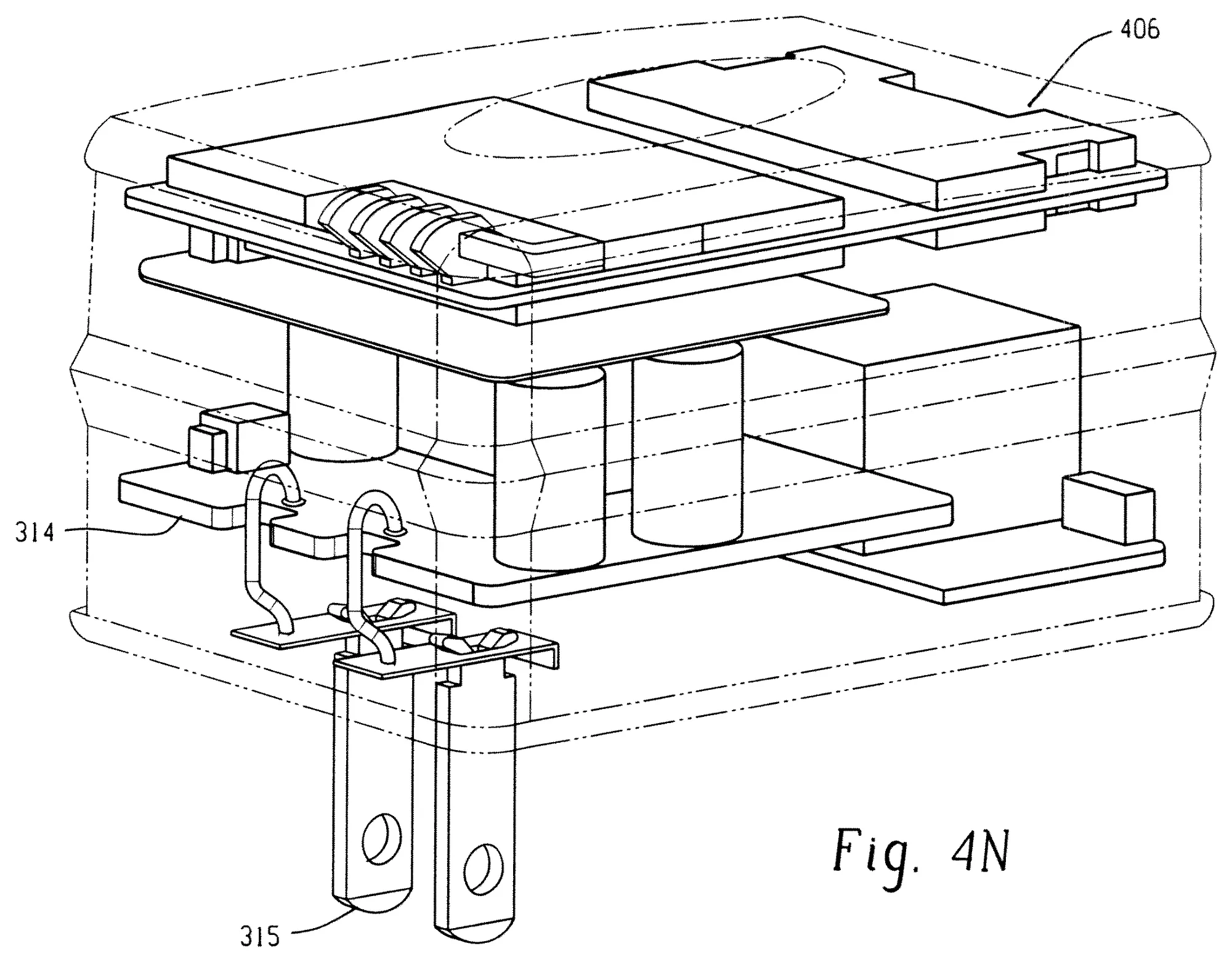
FIG. 4N, US8295990B2 — exploded internal assembly.
Patent drawing from US8295990B2: Home Energy Gateway onboarding: device naming, password, network join
FIGS. 6–7, US8295990B2 — Home Energy Gateway onboarding: device naming, password, network join.
Patent drawing from US8295990B2: appliance pairing: discovered devices, install codes, connected profile
FIG. 10, US8295990B2 — appliance pairing: discovered devices, install codes, connected profile.
ApplicationFiledGrantedStatusConfirmed by
US8295990B2Jan 2011Oct 2012Granted, active to 2031Read from the document
CA2752987CSep 2011Oct 2018Granted, active to 2031Office index
Low cost and flexible energy management system the gateway itself2010Granted, active

The gateway is a translator. Phone traffic comes in on 1 channel, is reformatted for the appliance network on another, and answers come back the same way, so devices that were never designed to meet can share a home. [Proposed: That is what let the product outlive 3 generations of hardware without being redesigned. Confirm the number before it ships.]

ApplicationFiledGrantedStatusConfirmed by
US8621097B2Jan 2011Dec 2013Granted, active to 2031Read from the document
CA2752977CSep 2011Aug 2019Granted, active to 2031Family record
Low cost and flexible energy management system and method for transmitting messages among a plurality of communication networks2010Granted, active

The whole system in 1 claim: a network for the people in the house, a network for the utility, a network for the appliances, and the gateway passing messages among the 3.

ApplicationFiledGrantedStatusConfirmed by
US8565928B2Jan 2011Oct 2013GrantedFamily record
CA2752994CSep 2011Oct 2019Granted, active to 2031Office index
Low cost and flexible energy management system configured in a unitary housing having a displayless configuration2010Granted, active

The box on the wall has indicator lights and no screen, because the family already owns the screens it needs. The filing says why in plain terms: every energy manager on the market in 2010 forced one more display into a home that already had computers, phones & televisions, and cost a great deal for it. Setup, schedules & status live on the phone or laptop instead, which keeps the gateway cheap and lets the interface improve without touching the hardware. [Proposed: Putting the interface where people already are is a position I have held since, and this is the first time it became a patent.]

ApplicationFiledGrantedStatusConfirmed by
US8775848B2Jan 2011Jul 2014Granted, active to 2031Read from the document
CA2752993CSep 2011Nov 2018Granted, active to 2031Office index
Low cost and flexible energy management system defined in a single unitary housing2010Granted, active

The same gateway as 1 small box that plugs straight into a wall outlet, computer, storage & power supply inside a single housing. The orthographic and exploded views in its figures are the product itself. [Proposed: I worked alongside industrial design on the enclosure; say so or cut.]

ApplicationFiledGrantedStatusConfirmed by
US9218631B2Jan 2011Dec 2015GrantedOffice index
CA2753003CSep 2011Nov 2018Granted, active to 2031Office index
Low cost and flexible energy management system providing user control arrangement in a plurality of modes2010Granted, active

The gateway can be switched between jobs: energy management, home automation & security, or a display mode with large type and stronger colors for someone with poor eyesight. The filing even imagines a bathroom scale reporting through it. [Proposed: The large-type mode is the earliest accessibility provision in any of my filings.]

ApplicationFiledGrantedStatusConfirmed by
US8977731B2Jan 2011Mar 2015GrantedOffice index
CA2752946CSep 2011Nov 2018Granted, active to 2031Office index

Where it started, 2008

1 invention

The first filing, and the one taken to the most countries.

Demand side management module2008Granted, active

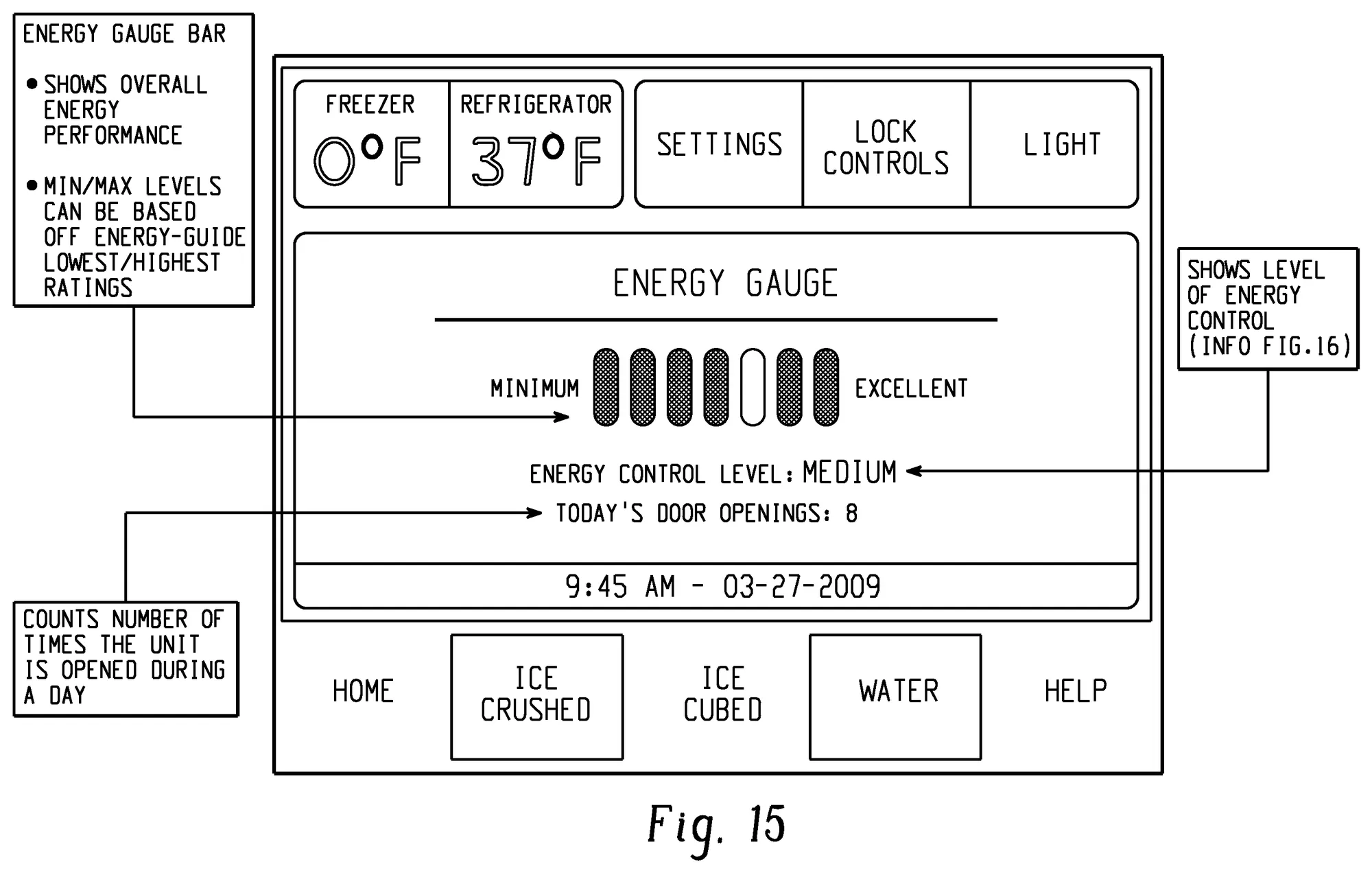
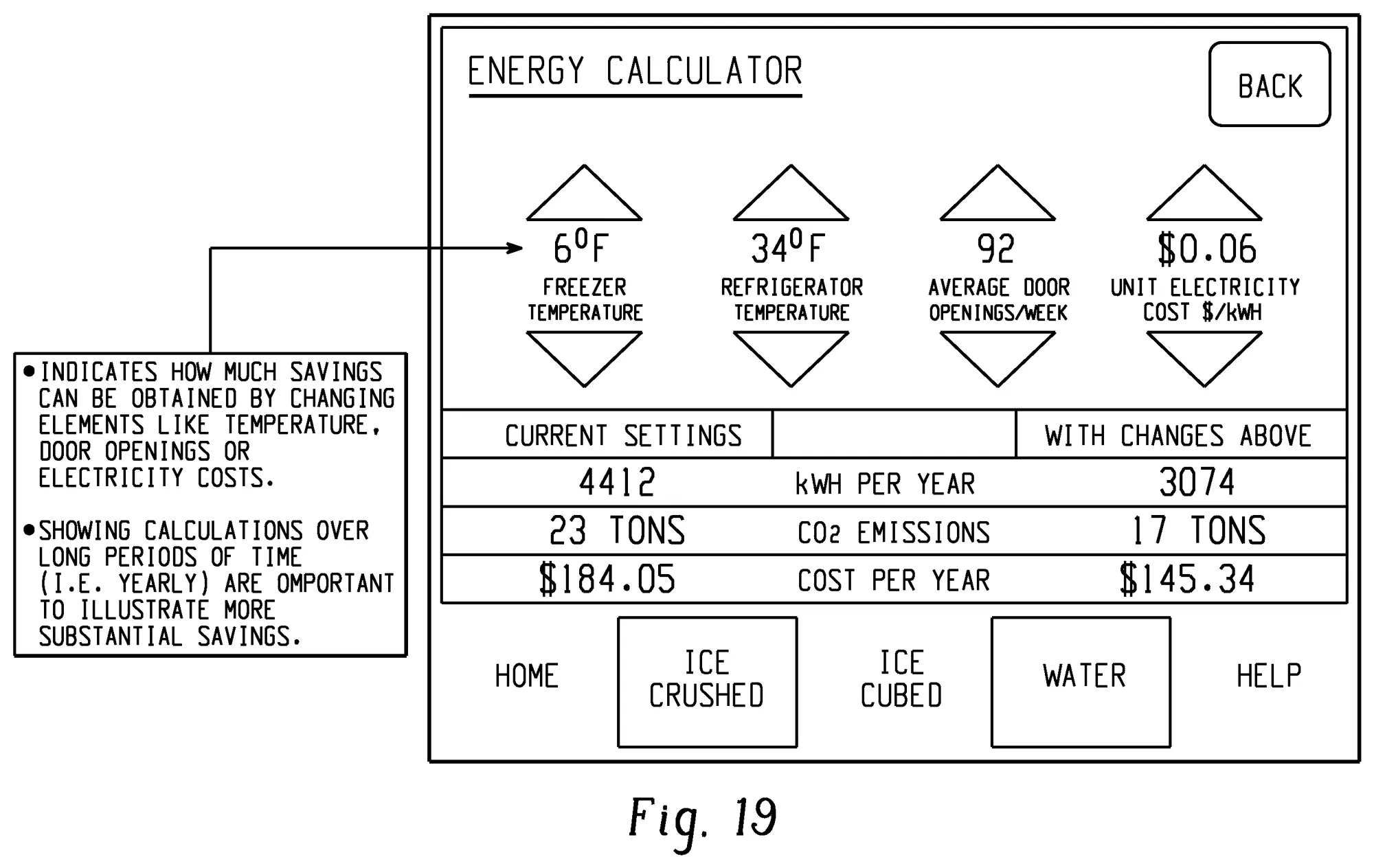
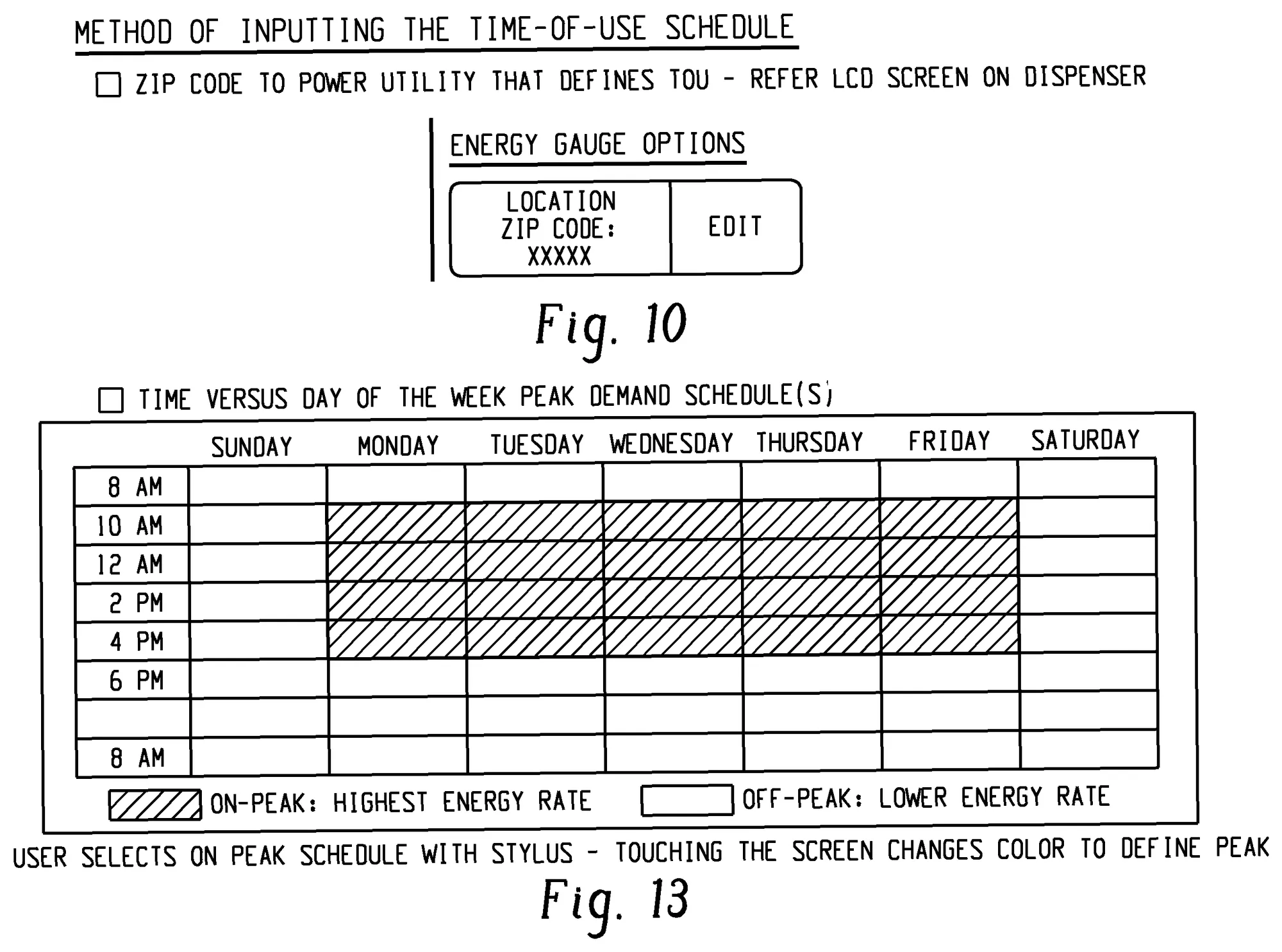
The first filing, from 2008. A snap-in module lets a refrigerator or dryer listen to whichever utility serves the house, and when the utility signals a peak the appliance drops to a low or lowest energy mode on its own. The family buys 1 appliance and it works with any utility, and the gauge & calculator on the refrigerator door show what each setting costs per year. [Proposed: This came in my first year as the first interaction designer at GE Appliances, and the door screens in its figures were the first smart-grid interfaces I designed.]

With Eric K. Watson, John K. Besore, Michael Thomas Beyerle, Darin Franks, Byron Guernsey, Darko Ilickovic, Mallika Ravindra Patel, Brian Michael Schork.

Patent drawing from US8355826B2: refrigerator door display with the energy gauge bar, annotated with what each level means
FIG. 15, US8355826B2 — refrigerator door display with the energy gauge bar, annotated with what each level means.
Patent drawing from US8355826B2: energy calculator screen: kWh/year, CO2 tons, cost per year against current settings
FIG. 19, US8355826B2 — energy calculator screen: kWh/year, CO2 tons, cost per year against current settings.
Patent drawing from US8355826B2: time-of-use schedule as a week grid, peak hours hatched, set by stylus on the dispenser screen
FIG. 13, US8355826B2 — time-of-use schedule as a week grid, peak hours hatched, set by stylus on the dispenser screen.
ApplicationFiledGrantedStatusConfirmed by
US8355826B2Sep 2009Jan 2013Granted, active to 2031Read from the document
US8626347B2Dec 2012Jan 2014GrantedOffice index
WO2010031024A1Sep 2009—Application, ceasedRead from the document
CA2723060CSep 2009Aug 2018Granted, active to 2029Office index
AU2009290585B2Sep 2009Jan 2016Granted, active to 2029Family record

When the house makes its own power

5 inventions

Solar, batteries & generators, and a household that sells energy as well as buying it.

Energy smart system2010Granted, lapsed

One system watching everything in the house that uses, makes or stores energy: each appliance, the solar panels, the battery, the meter for the whole home. A single application serves both the family and the utility from the same data, and gives the household an energy profile, a carbon footprint, and suggestions for what to change next. [Proposed: This is the system view the rest of the GE Appliances filings sit inside.]

With Natarajan Venkatakrishnan, Kevin Farrelly Nolan, David Joseph Najewicz.

ApplicationFiledGrantedStatusConfirmed by
US8560133B2Sep 2010Oct 2013Granted, lapsedFamily record
US9218632B2Sep 2013Dec 2015Granted, lapsedOffice index
CA2753809A1Sep 2011—Application, discontinuedOffice index
Energy manager with minimum use energy profile2010Granted, active

On a hot afternoon the solar panels make the most power at the same hour the utility pays the most for it. During that peak the house drops to a minimum-use profile the family has set, so as much of its own generation as possible is sold back at the premium rate.

With Joseph Mark Brian, Michael Thomas Beyerle, Jay Andrew Broniak.

ApplicationFiledGrantedStatusConfirmed by
US8930037B2Oct 2010Jan 2015GrantedOffice index
CA2753067CSep 2011Sep 2020Granted, active to 2031Office index
Manage whole home appliances/loads to a peak energy consumption2011Granted

The family sets a ceiling for the whole house and ranks their appliances. When demand would cross the ceiling the system turns things down in their order, not its own.

With Michael Thomas Beyerle, Jay Andrew Broniak, Joseph Mark Brian.

ApplicationFiledGrantedStatusConfirmed by
US20120053741A1Mar 2011—Application, discontinuedRead from the document
US9292031B2Aug 2013Mar 2016GrantedOffice index
Household energy management system and method for one or more appliances and a power generator2010Granted, active

When the grid goes down and the generator starts, the system keeps the load under what the generator can supply. It switches off whatever the family has marked as non-essential rather than letting the whole house trip.

ApplicationFiledGrantedStatusConfirmed by
US9246332B2Oct 2010Jan 2016GrantedOffice index
CA2753025CSep 2011Oct 2018Granted, active to 2031Office index
Energy management system incorporating a gas powered generator2010Application

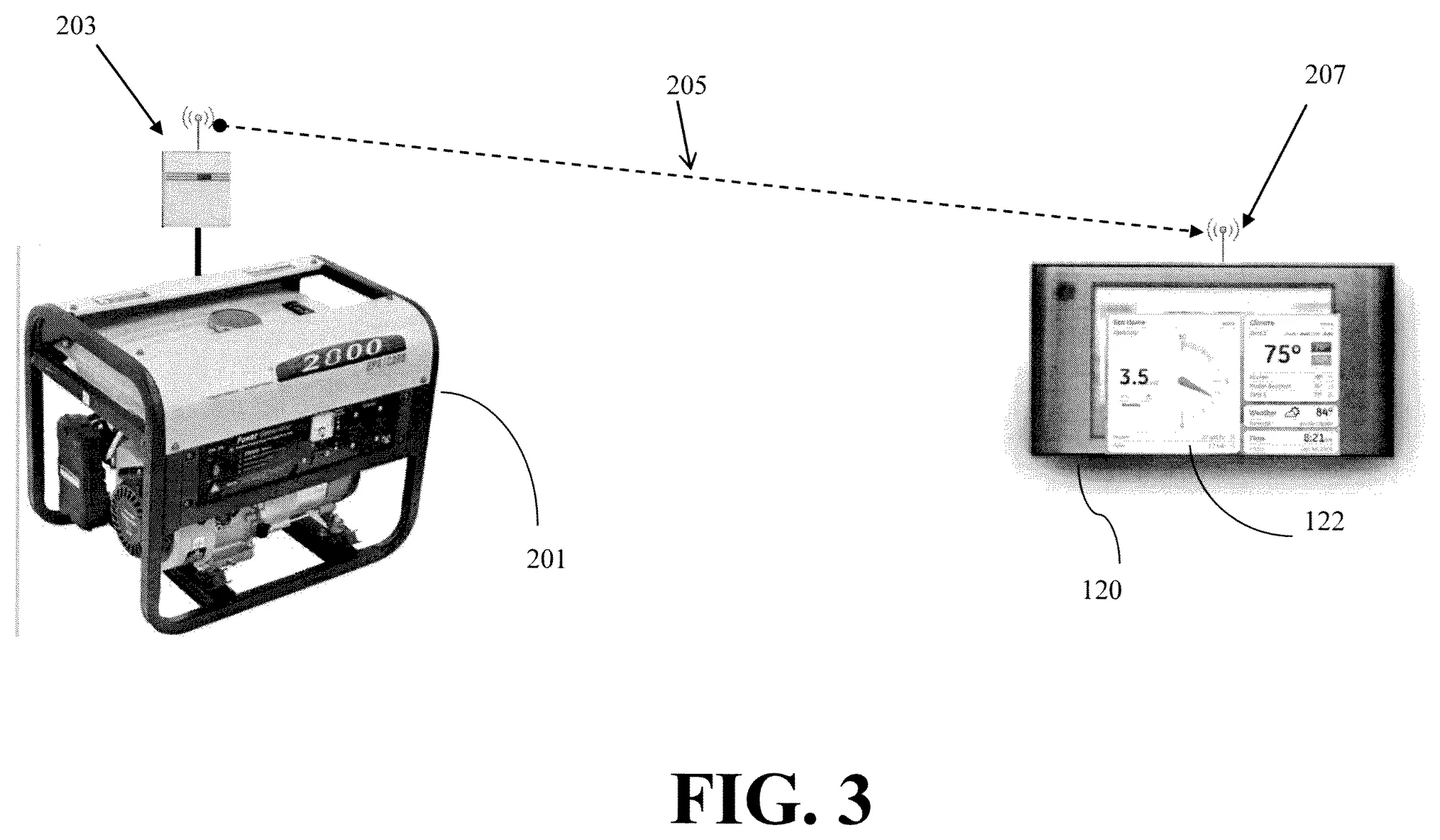
A standby generator usually tells you its fuel, battery & service state on a panel out by the garage. This puts those readings on the same home screen as everything else, so you know it will start before you need it to.

With Joseph Mark Brian, Michael Beyerle, Jay Broniak.

Patent drawing from US20120065797A1: a photographic halftone: the generator itself paired with the in-home display
FIG. 3, US20120065797A1 — a photographic halftone: the generator itself paired with the in-home display.
ApplicationFiledGrantedStatusConfirmed by
US20120065797A1Oct 2010—Published applicationOffice index
CA2755712A1Oct 2011—Application, discontinuedRead from the document

Hot water

5 inventions

Hot water is the biggest load in a house that can wait an hour, which is why 5 filings are about it.

Hot water heater with an integrated flow meter2010Application

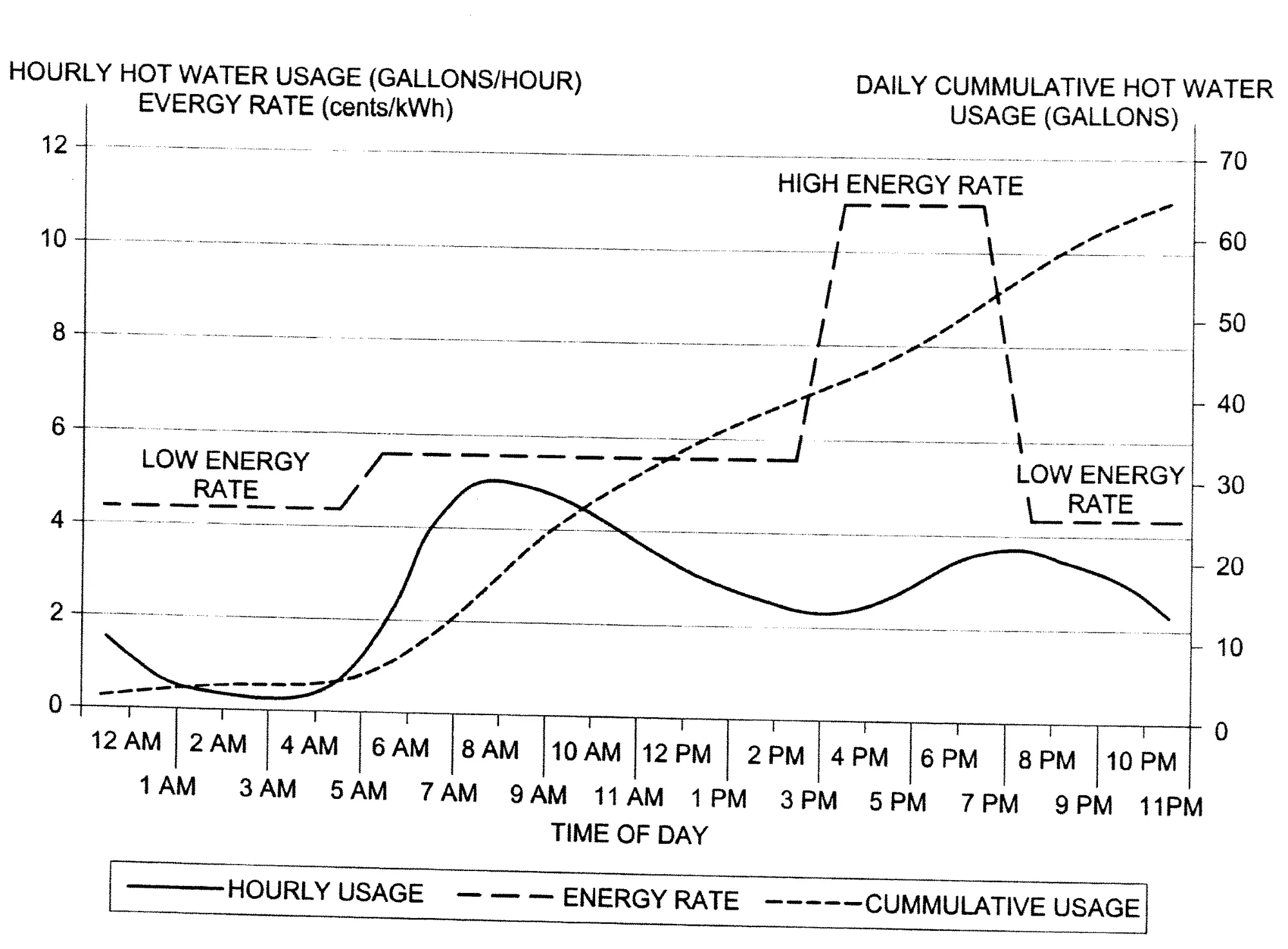
A water heater that measures its own hot and cold flow and reports it to the home network, so the family can see how much hot water they use, what it costs to heat, and how this week compares with last.

Patent drawing from US20120054123A1: hourly hot water usage plotted against energy rate across the day, with cumulative overlay
FIG. 1, US20120054123A1 — hourly hot water usage plotted against energy rate across the day, with cumulative overlay.
ApplicationFiledGrantedStatusConfirmed by
US20120054123A1Sep 2010—Published applicationOffice index
CA2753026A1Sep 2011—Application, discontinuedOffice index
AU2011226796A1Sep 2011—Published applicationOffice index
Hot water heater scheduler2010Application

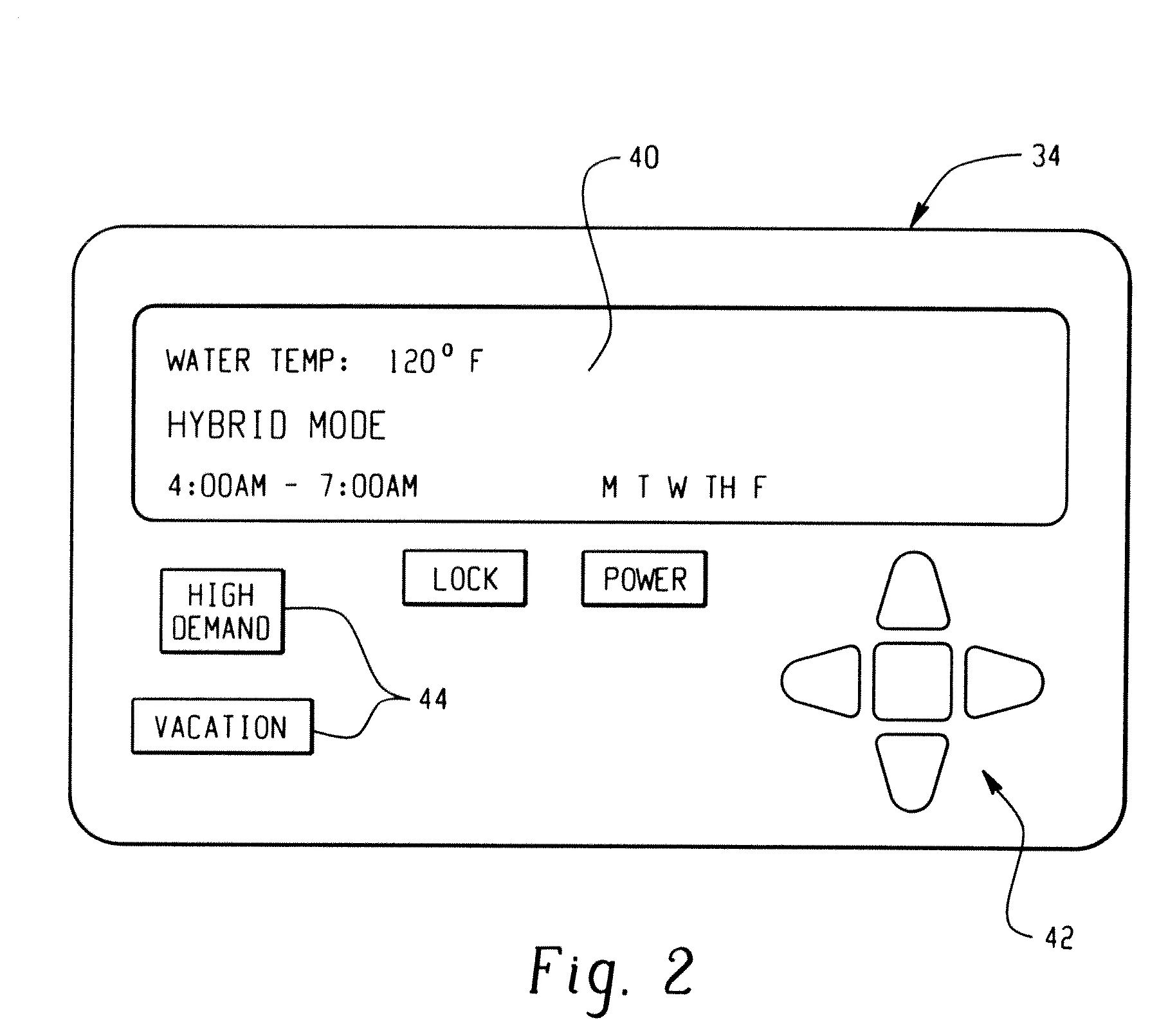
Most water heaters hold 50 gallons at temperature all day for 2 showers in the morning. This one takes a weekly schedule from its control panel, lets the water cool when nobody needs it, heats ahead of demand, and has vacation & high-demand keys for the exceptions.

Patent drawing from US20120060771A1: water heater control panel: temperature, hybrid mode, day selectors, vacation and high-demand keys
FIG. 2, US20120060771A1 — water heater control panel: temperature, hybrid mode, day selectors, vacation and high-demand keys.
ApplicationFiledGrantedStatusConfirmed by
US20120060771A1Oct 2010—Published applicationOffice index
CA2753803A1Sep 2011—Application, discontinuedOffice index
Self-programming water heater2011Granted

The scheduler without the scheduling. The heater learns when the house actually draws hot water and programs itself around it, so the saving happens without anyone opening a settings screen.

ApplicationFiledGrantedStatusConfirmed by
US8867908B2Aug 2011Oct 2014GrantedOffice index
Home energy management system incorporating a pool pump2011Granted

A pool pump runs for hours a day and does not care which hours. This brings it into the home system with a schedule that avoids peak rates, and a screen that shows the utility's state and lets the owner override it.

ApplicationFiledGrantedStatusConfirmed by
US8467908B2Jan 2011Jun 2013GrantedOffice index
Energy manager — water leak detection2010Granted, active

A flow meter on the main line, read by the home controller, totals how much water the house is using and compares it with what it should be. If something is running that should not be, it tells the family and can close the shutoff valve from wherever they are. [Proposed: The filing opens with a line I still agree with: a leaky pipe always happens at the worst possible moment.]

With Jay Andrew Broniak, Michael Thomas Beyerle, Joseph Mark Brian.

ApplicationFiledGrantedStatusConfirmed by
US9019120B2Nov 2010Apr 2015GrantedOffice index
CA2756341COct 2011Nov 2019Granted, active to 2031Office index

Seeing where the energy goes

5 inventions

The screens. [Proposed: Closest to what I do.]

User interface for monitoring resource consumption2011Granted

Pick a start and an end time and see what each appliance, and each job an appliance does, contributed to the house's electricity, gas or water. Consumption by task rather than by meter, so a family can see what a load of laundry costs.

ApplicationFiledGrantedStatusConfirmed by
US8769426B2Sep 2011Jul 2014GrantedOffice index
User interface for determining resource consumption2011Application

A separate invention from the one above, though the titles differ by 1 word. This one answers a question after the fact: between these 2 dates, how much did the dryer use? Pick the range, pick the appliance, read the number.

ApplicationFiledGrantedStatusConfirmed by
US20130073059A1Sep 2011—Published applicationOffice index
Home energy management screensaver2009Application

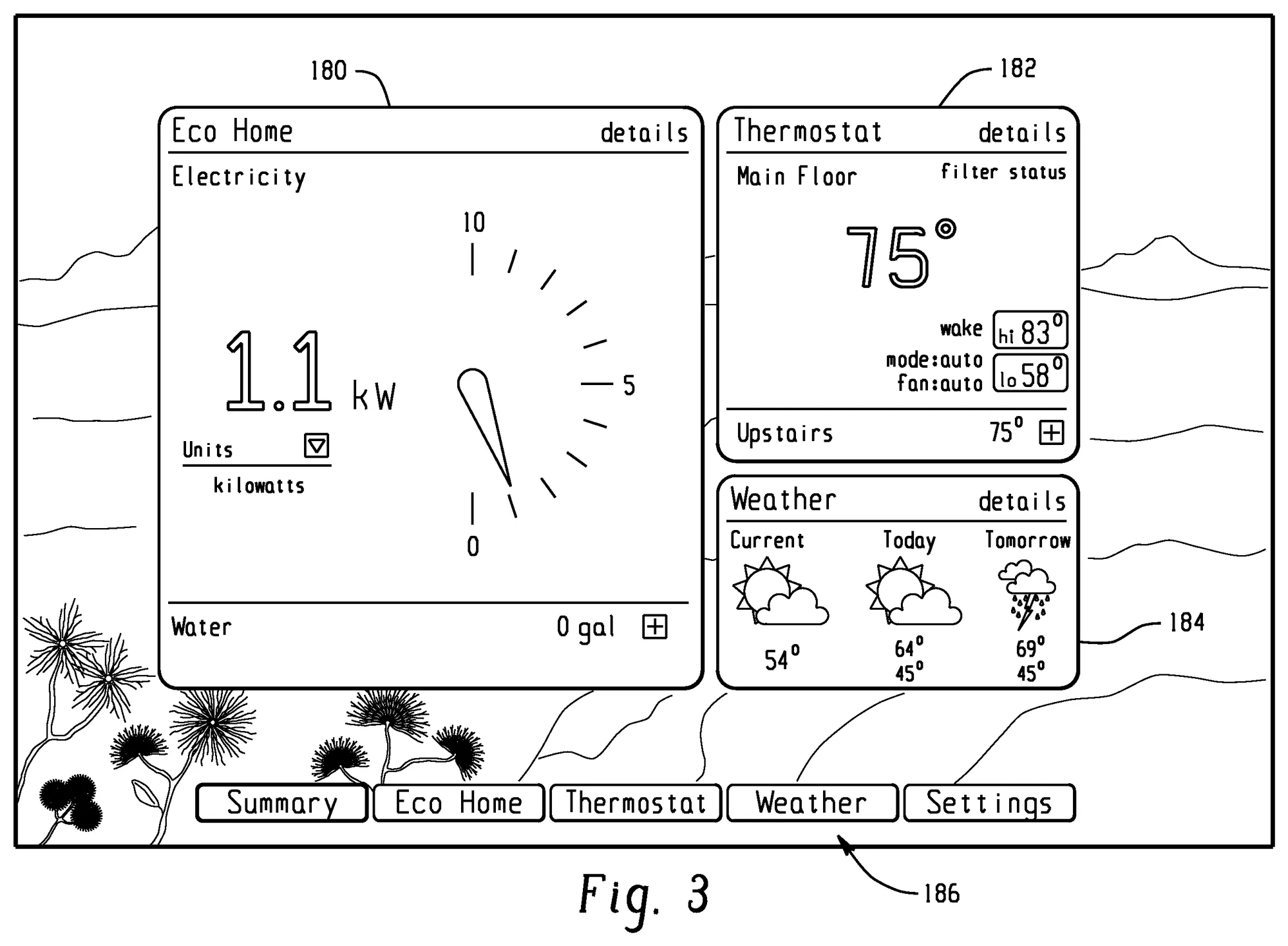
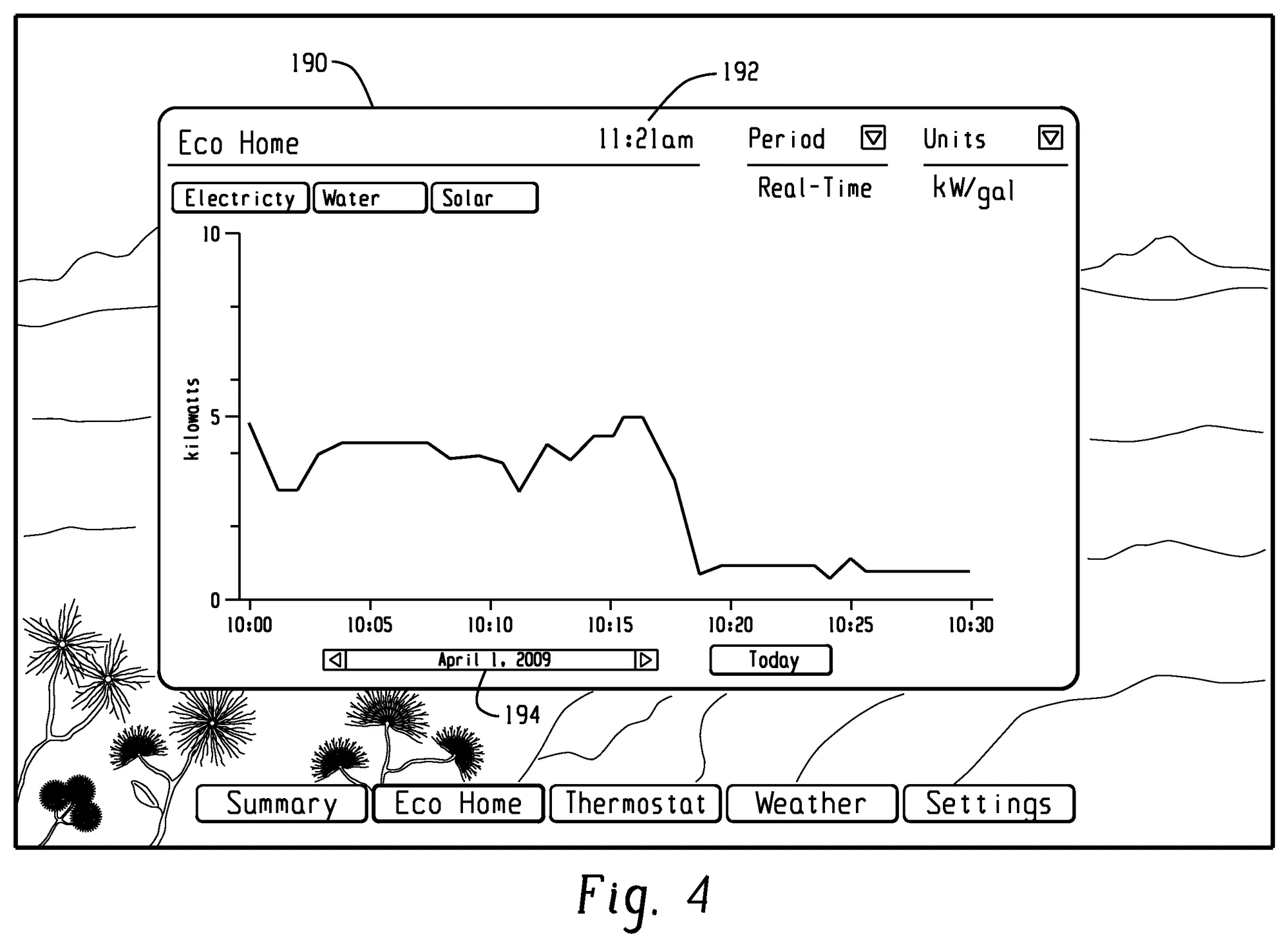
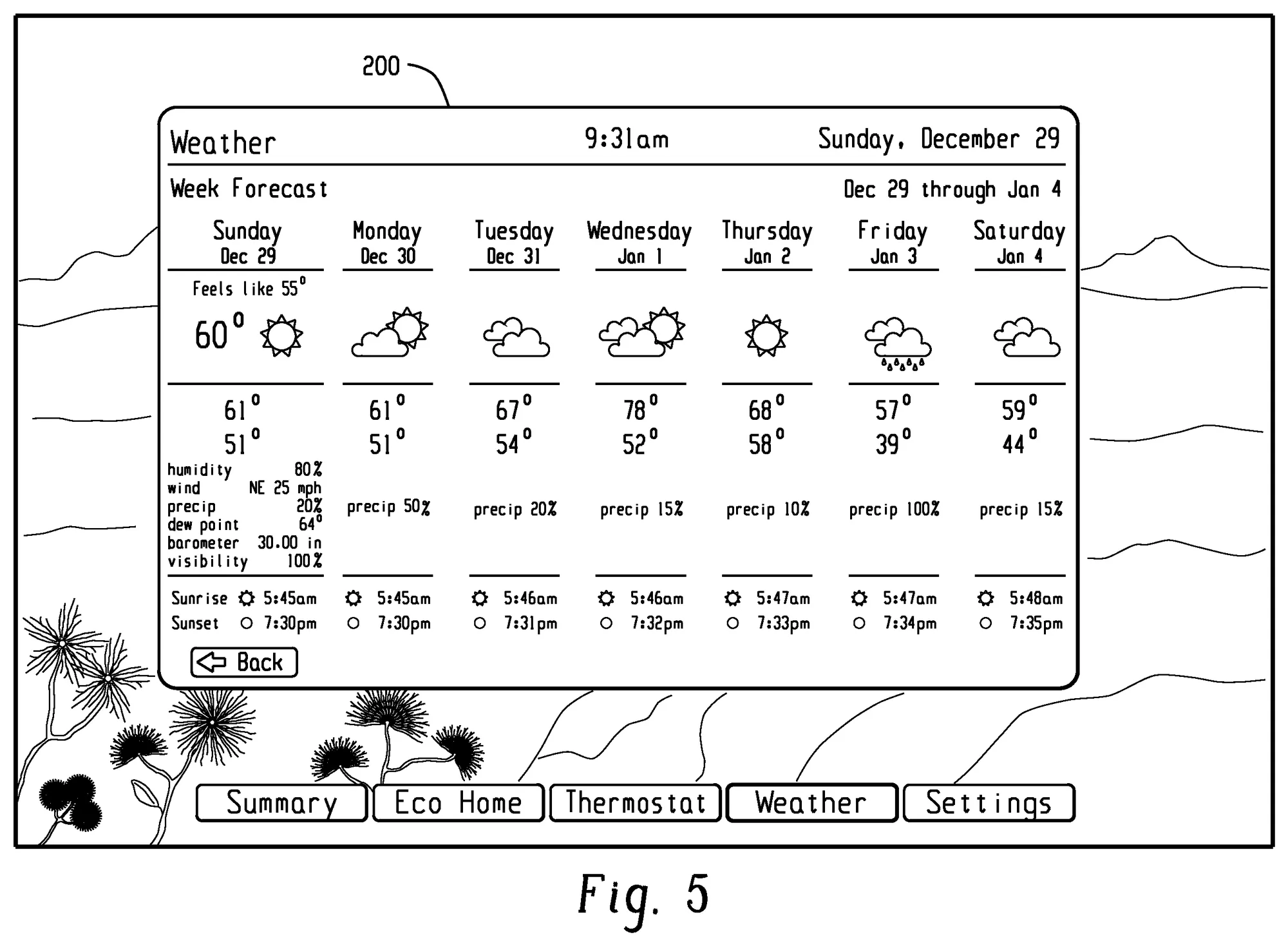
When the family computer sits idle it becomes the home's energy display, cycling through live electricity, water & gas use and what each is costing right now. Nobody has to log in or go looking; the information is on the screen they walk past. [Proposed: My first filing on ambient display, from 2009, and the thinking carried straight into the control room work at GE Digital 6 years later.]

With Jay Andrew Broniak, Natarajan Venkatakrishnan, Joseph Mark Brian, Byron K. Guernsey.

Patent drawing from US20110154269A1: Eco Home dashboard: analog kW gauge, thermostat card, weather card, tab bar
FIG. 3, US20110154269A1 — Eco Home dashboard: analog kW gauge, thermostat card, weather card, tab bar.
Patent drawing from US20110154269A1: real-time consumption chart with period and unit selectors
FIG. 4, US20110154269A1 — real-time consumption chart with period and unit selectors.
Patent drawing from US20110154269A1: seven-day forecast view inside the same shell
FIG. 5, US20110154269A1 — seven-day forecast view inside the same shell.
ApplicationFiledGrantedStatusConfirmed by
US20110154269A1Dec 2009—Published applicationOffice index
CA2722629A1Nov 2010—Application, discontinuedRead from the document
Home energy manager system2010Application

The home energy manager as a whole: every appliance reports its own consumption, a meter reports the house total, and a controller passes the utility's price & demand signals to the appliances, which decide locally how to respond.

ApplicationFiledGrantedStatusConfirmed by
US20120053739A1Sep 2010—Published applicationOffice index
Device and method for energy management in a household2011Granted

Pairing an appliance to the home network without typing a security key. The radio is plugged into the phone or laptop first, which binds it, then into the appliance, so the connection is secure and the setup is physical: plug in here, then plug in there.

With Michael Francis Finch, Henry Nader Kobraei, Elliott Dean Koehler.

ApplicationFiledGrantedStatusConfirmed by
US9083537B2Oct 2011Jul 2015GrantedRead from the document

Hearing it

1 invention

1 filing, where years of work on sound in interfaces produced a patent.

Critical peak pricing audio alert2010Application

A price change from the utility usually arrives as a text at 4 in the morning. This one is a sound: when electricity is about to get expensive, the appliances that already have speakers chirp from several rooms, in time for someone to act. [Proposed: Sound as an interface runs from my student work for blind users, through the Kentucky School for the Blind and the Georgia Tech sonification lab, and this is where that line of work produced a patent.]

ApplicationFiledGrantedStatusConfirmed by
US20120050037A1Sep 2010—Published applicationOffice index
CA2754512A1Sep 2011—Application, discontinuedOffice index

The record

Inventor, not owner

I am a named inventor on every application here and the owner of none. The GE Appliances filings now sit with Haier US Appliance Solutions, the equipment-monitoring family with Baker Hughes, and the other two with General Electric. The record establishes authorship, which is the right thing for a portfolio to claim.

How it was checked

Validated against live patent-office records, and separated from at least a dozen other inventors who share my name. On these records I appear as David C. Bingham, David Bingham or David Clayton Bingham. Every application links to its public record.

Confirmed by

Each application states how my name on it was confirmed: read from the document itself; returned by the patent office’s inventor index; named on another record of the same family; or, in one case, a search summary only. Status is stated only where it has been verified — a grant whose current standing I have not checked reads “Granted” and no more.

AI4, Drafted. Categories and order of importance by me; invention descriptions drafted by AI from each filing; the record compiled with AI from patent-office searches and checked against the filings.The tiers