My design philosophy, conveyed through an interactive installation.
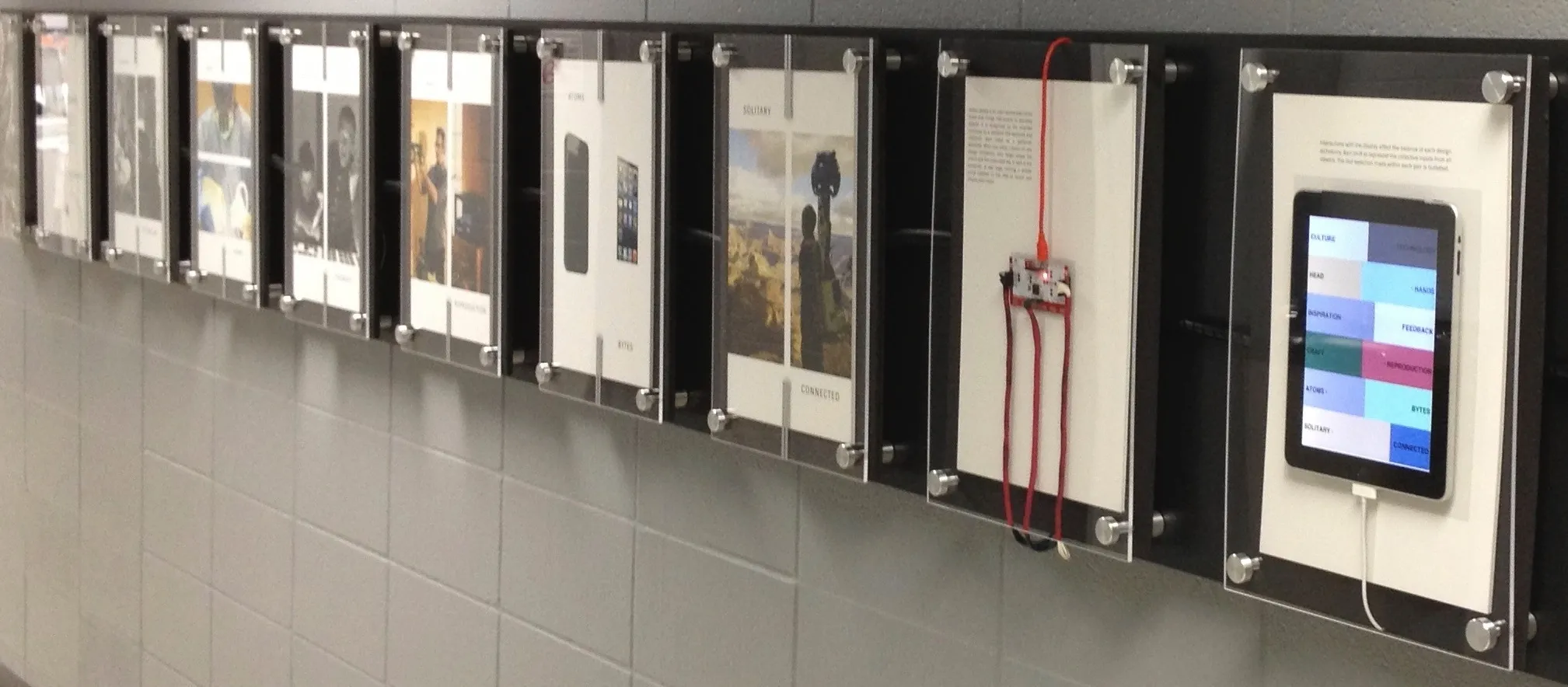
The nine panels of Design Dichotomies on the corridor wall at the GE Appliance design studio in 2013. This is the opener: the whole installation in one view, from the introduction panel to the iPad tally at the end.
Design Dichotomies
The display
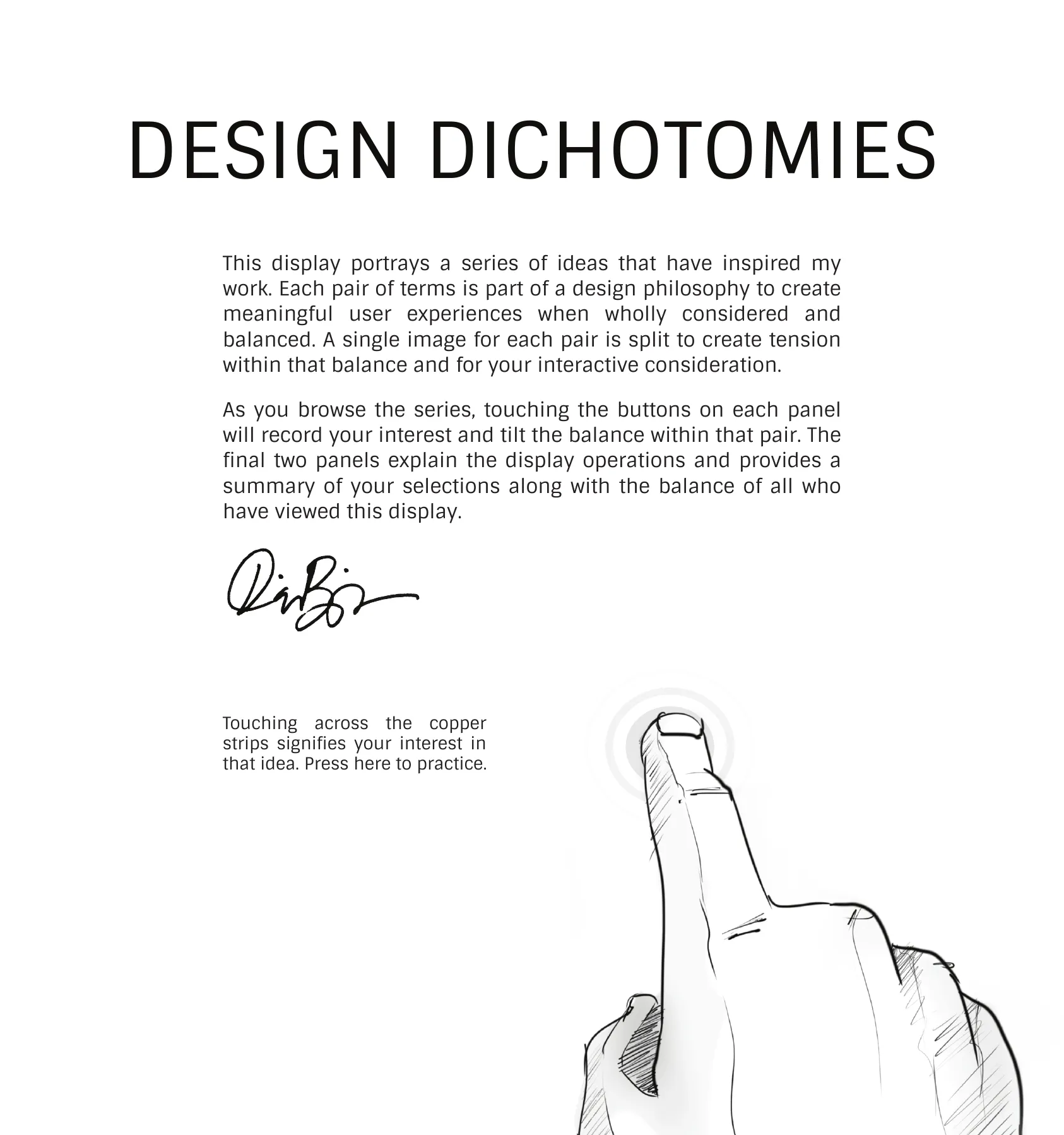
The introduction panel beside my own account of the setting: a shared studio display that each team member takes over in turn, which I used for six pairs of opposing terms. The panel carries the explanation, my signature and a practice target so a visitor could try the touch mechanism before the boards.
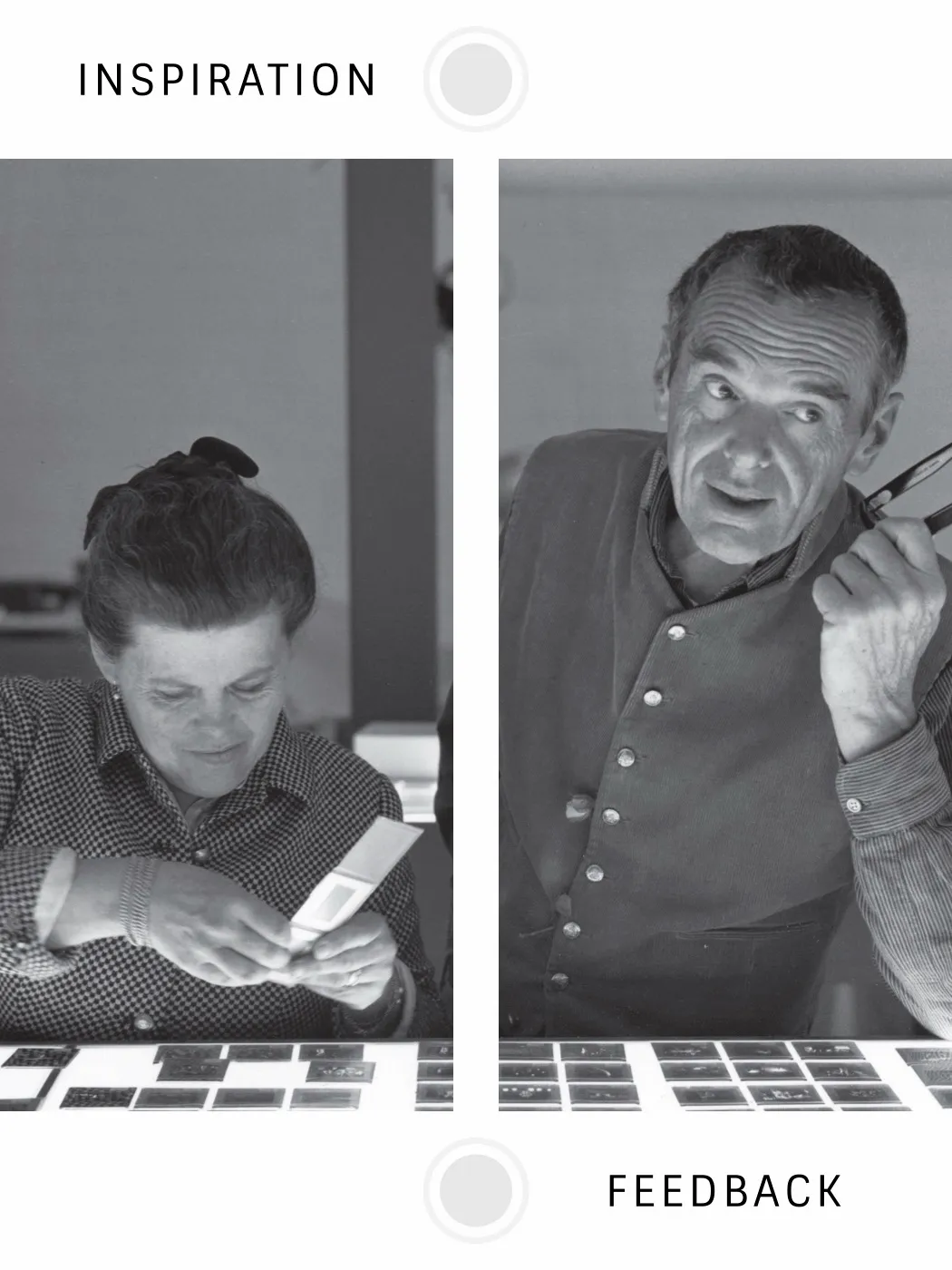
The GE Appliance design studio entrance has a display for individual team members to frame personally inspirational images. About every-other month, a new team member takes over the display. For each single image, I included two opposing terms important to my design philosophy and process.
The pairs
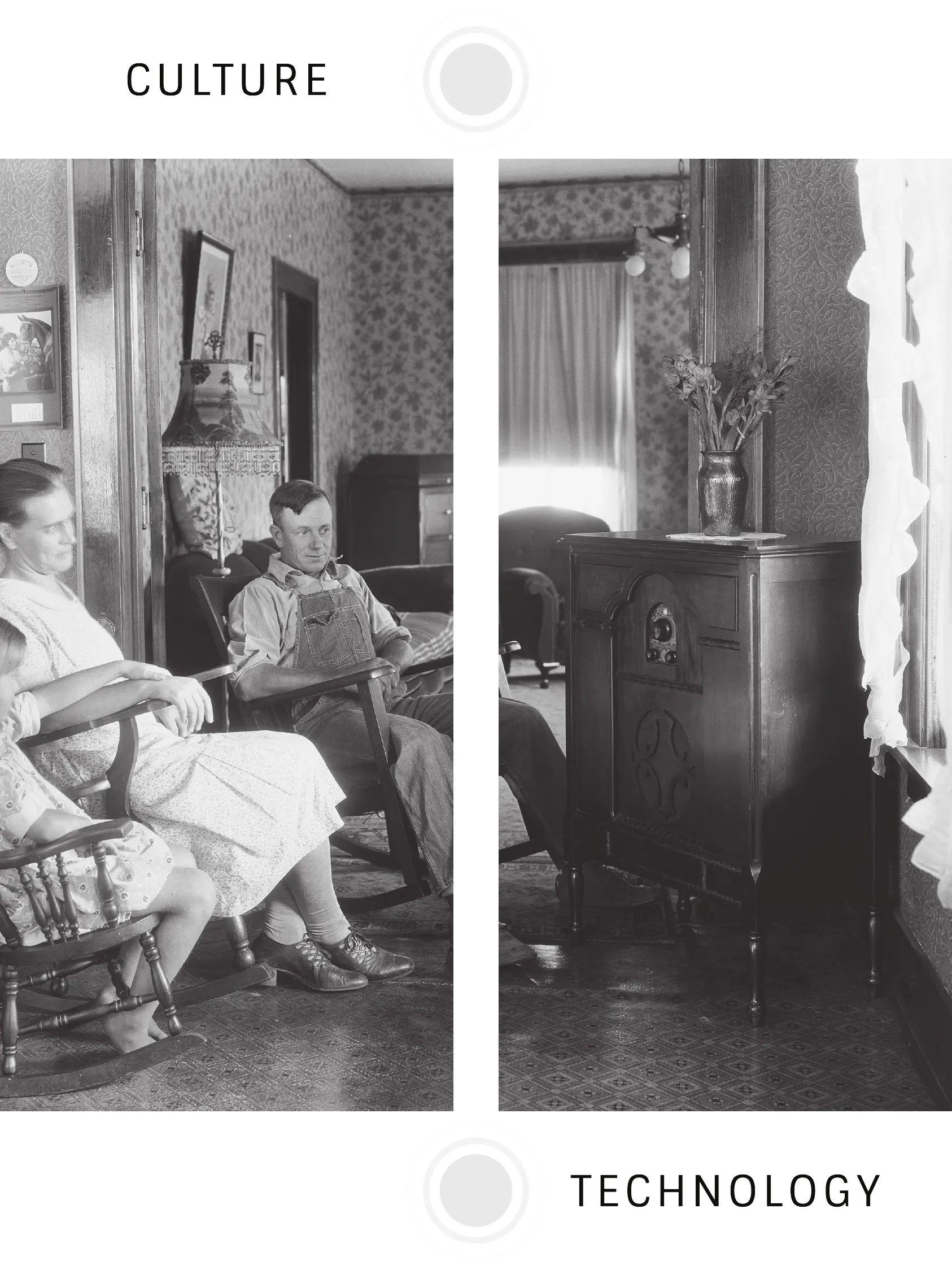
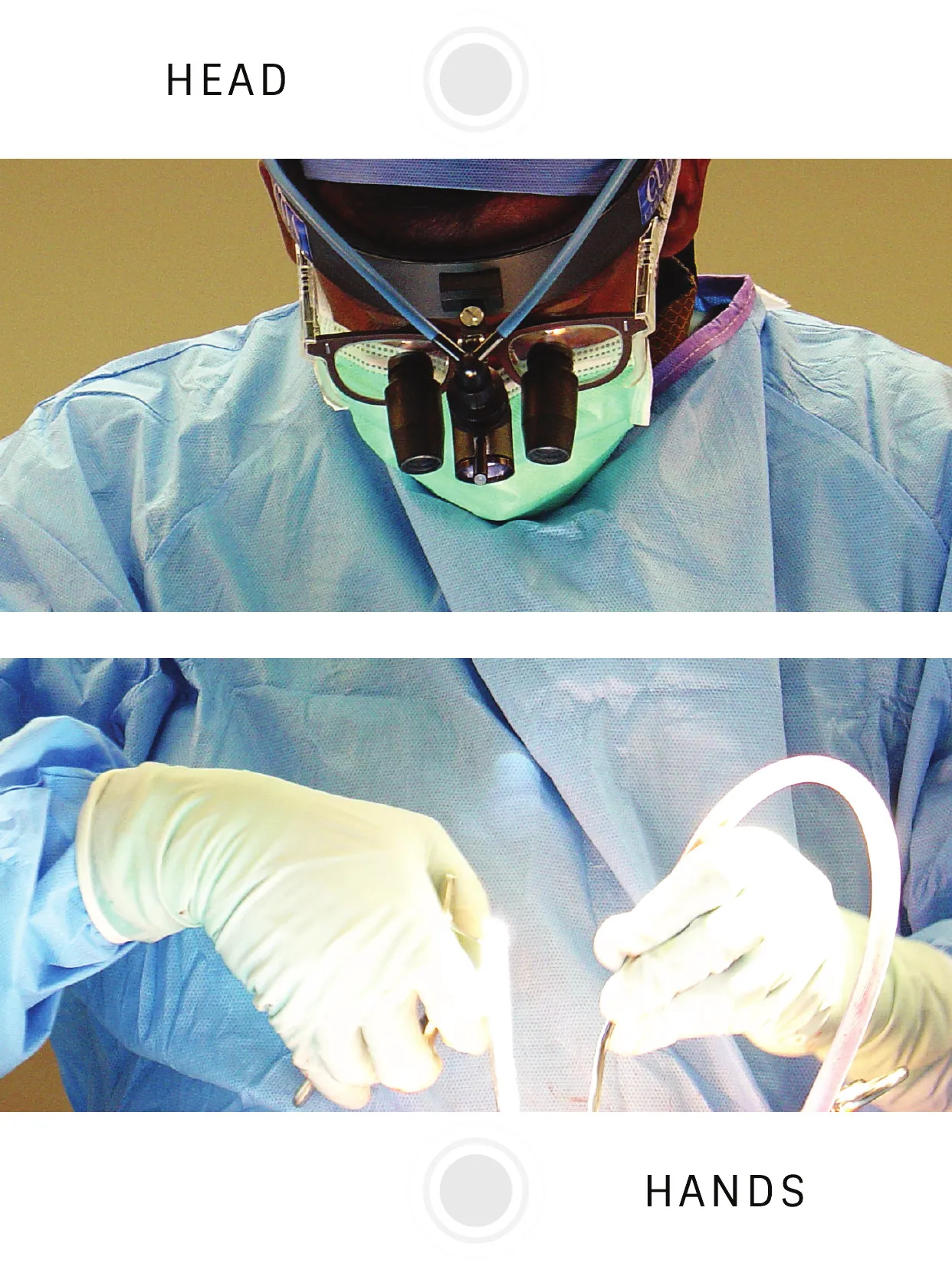
The first three boards: Culture and Technology, Head and Hands, Inspiration and Feedback. Each is a single photograph split in two, one term and one touch target at each end, so the viewer has to weigh one half against the other and press a side.
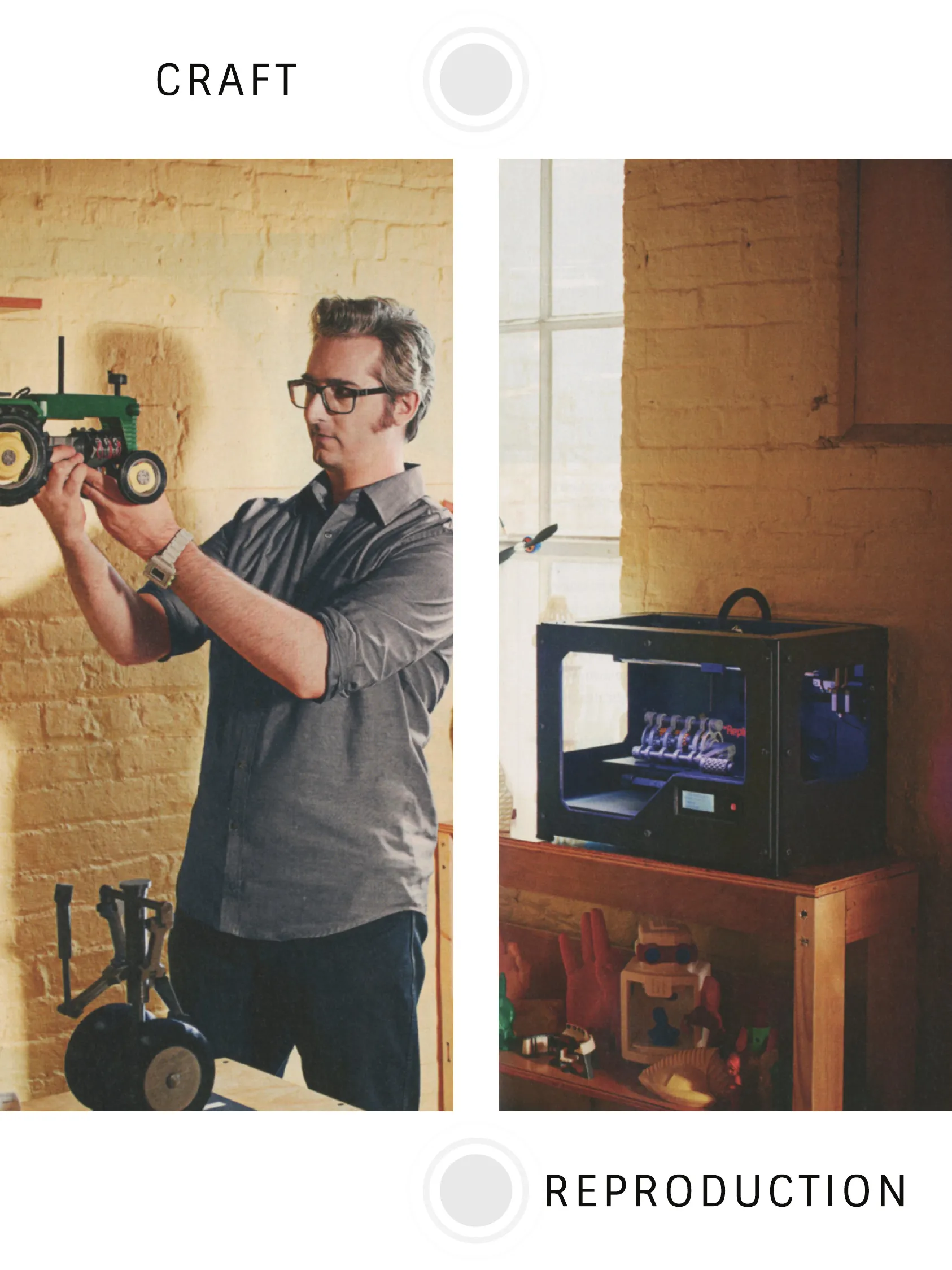
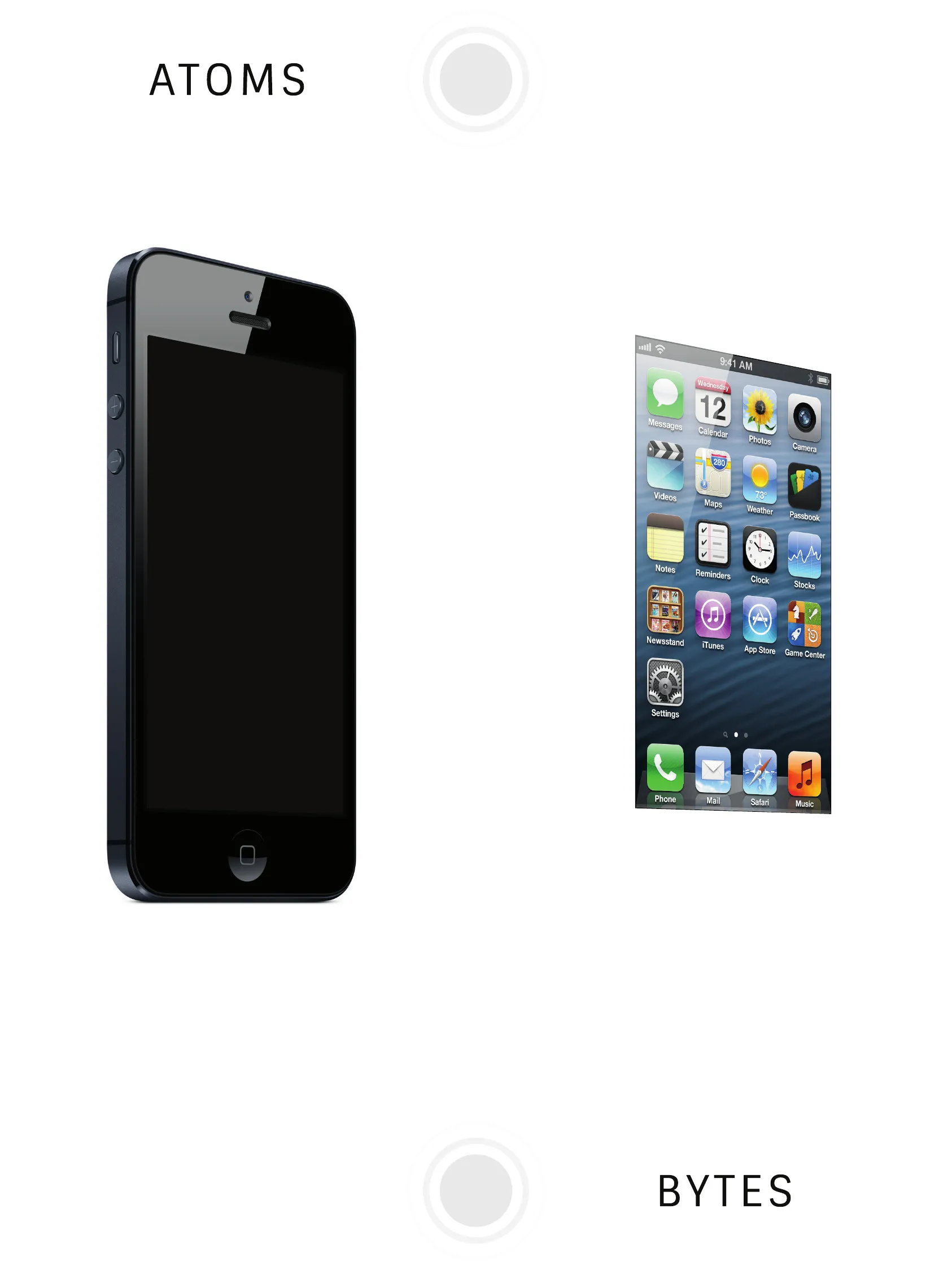
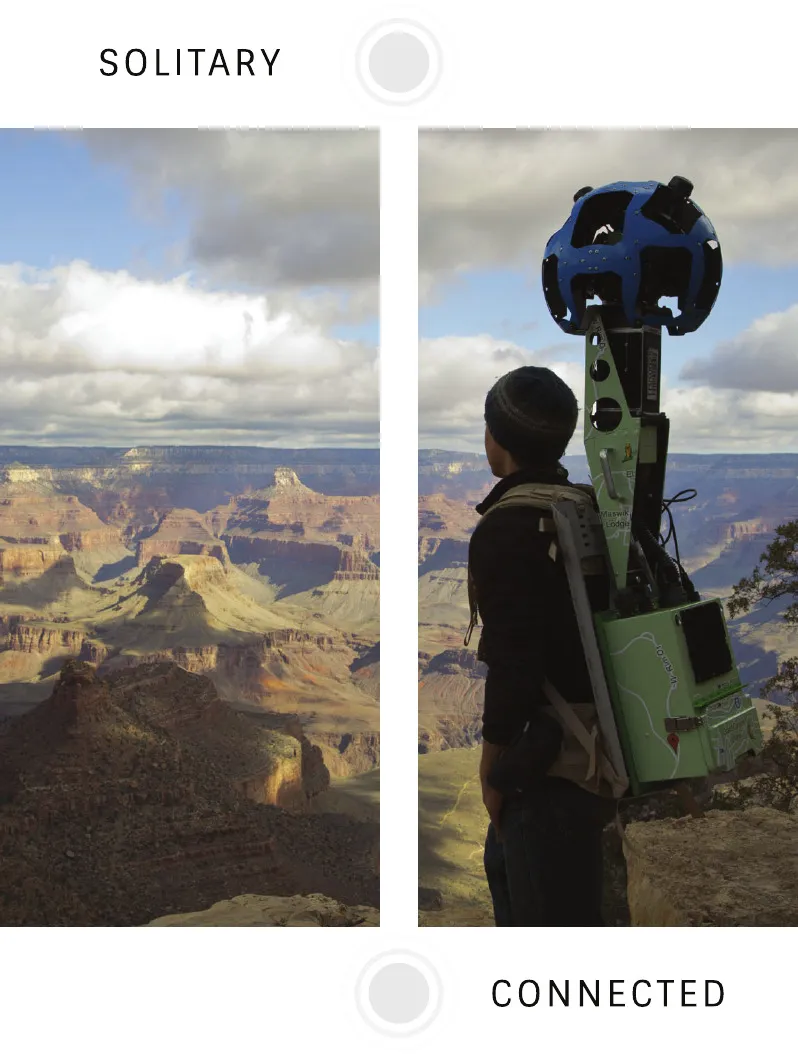
The second three boards: Craft and Reproduction, Atoms and Bytes, Solitary and Connected. With the first three they make the full set of six pairs, each split image built to hold a tension rather than settle it.
How was it made?
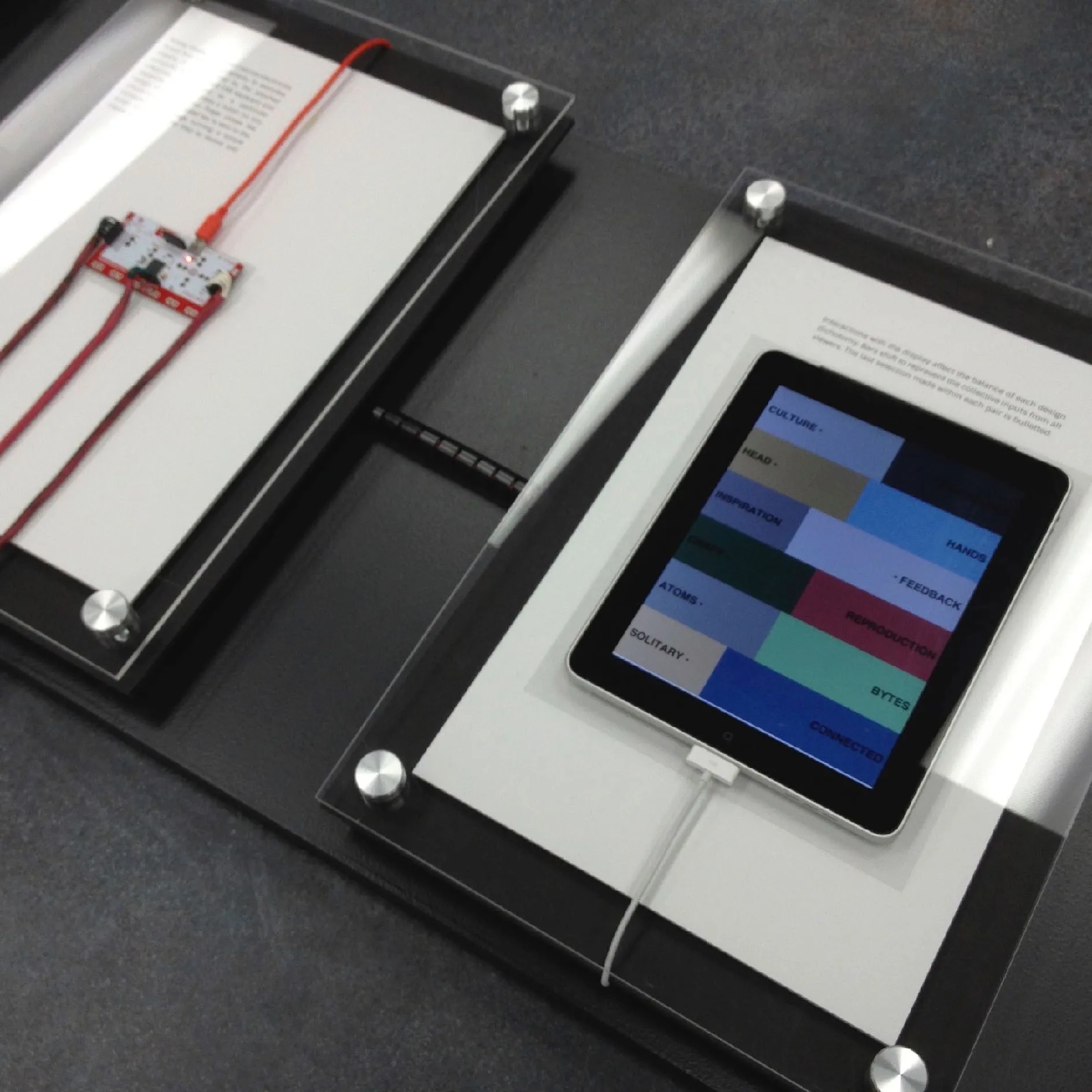
How the installation worked, in my words from the deck, beside a close-up of the last two panels. A MaKey MaKey board read each touch across the copper strips as a keystroke, a web page spoke the chosen term aloud, and the iPad on the final panel kept a running tally of every selection as paired bars.
MaKey-MaKey is an open-source electronics board that brings interactivity to everyday objects. It is recognized by the attached computer as a standard USB keyboard and interprets each input as a particular keystroke. When a viewer press a button on any design dichotomy, their finger closes a circuit across the copper strips and the associated key stroke is sent to the computer. A web page running a simple script speaks the selection aloud and updates the iPad display.
AI usage
2, Ideas. AI helped with research, sources, brainstorming or structure. I wrote every word.The tiers