Proposal
Introduction
The proposed work is to study the adoption and use of digital photography in developing countries, specifically Haiti. The core use of digital photography examined will be as a communication medium in telemedicine. Further, the study will investigate the social and cultural factors that influence the adoption of telemedicine by the local population.
Specific factors to be taken into account when developing and implementing the study are; the Technical/Economic Infrastructure of the nation, Political Environment, Geography and Ecological Environment, Education Level of the participants, and the Cultural beliefs of the local Populace.
The Technical/Economic Infrastructure of the country, Geography and Ecological Environment, and Political Environment are factors to be considered as they affect the logistics of the implementation of a telemedicine system. Technical considerations concern the communications infrastructure available upon which to implement the system as well as other practical concerns such as electrical power supply. Economic considerations will include upkeep and replacement of the necessary equipment, these cost factors will help in determining the community’s ability to support such a system. It is noted that during this study the PIs and their team will maintain the equipment. Geography and Environment are closely tied to the Technological and Economic factors, such as communication infrastructure and local industry that contributes to the economic situation. Political factors such as governmental stability, graft, and bribes are to be noted and taken into account (see comments by Robert Ellis). It is understood that the concerns expressed are not all encompassing and that the study will take into account new factors as they are encountered.
This study will primarily focus on observing the Cultural factors that concern the adoption and use of a telemedicine system. Cultural factors expected to affect the study are: religious beliefs, family structure, social interaction amongst individuals within the participating community, the communication between the remote health clinic and the site where the modern medical diagnosis will be assessed, as well as interaction between the community and the technological artifacts. As with the logistical concerns, it is not proposed that stated cultural factors are a full and complete measure of the cultural situation to be encountered. The PIs will be open to and consider new factors as they reveal themselves through the course of the study. Historical concerns, such as the local population’s attitude towards traditional photography will also be integrated. The Education Level of the local populace is tied to the culture of the community and will therefore be included in the cultural assessment.
It is hypothesized that a preliminary model may be developed to utilize the lessons learned in implementing this initial system in Haiti, to a model for implementation of a telemedicine system for countrywide distribution. It is acknowledged that the different aforementioned factors, will vary throughout regions within the country. However, Haiti was chosen partially for its relatively small size and consistent cultural background permeating through the rural regions where a telemedicine system would be implemented. The PIs will take into account that there will be slight variations in the communities and will attempt to make the preliminary model flexible enough to accommodate.
A developing country, like Haiti, where modern medical care is centralized in the major cities and the outlying areas either do not have the expertise or the medical infrastructure to make proper diagnosis may especially benefit from a telemedicine environment. Therefore it is imperative to develop a preliminary model for implementation that takes into account the previously mentioned factors. Implementing a telemedicine environment without considering such factors could seriously hinder the adoption and use of such a system. This study plans to study these factors, especially the cultural, in order to predict how they will hinder such an implementation. It is also hypothesized that in some instances the cultural beliefs of the local populace can be used in a way that helps the adoption of a telemedicine environment.
Background
This section discusses the reasons for choosing Haiti as the site for the proposed study, an overview of the current state of the medical environment within the country, and past implementations of telemedical systems within developing countries.
The specific location for this study will require an appropriate balance between modern facilities, social development, and fundamental levels of need. Areas too far on either end of the spectrum will limit the potential quality of the study. In some larger cities in third-world countries, huge numbers of people live in urban slums with shanties as housing. They don’t have running water or sewage systems and must rely on community water wells. These cities do have electricity and some infrastructure to support communications networks. In the case of Haiti, this city is Port au Prince.
Many villages in developing nations are so far removed from basic conveniences and standard of living, such as sanitation, potable water, electricity, educational opportunities, and access to health care, that most modern technology drastically exceeds their needs. Donated medical equipment such as dialysis and monitoring machines are often too specialized for areas where malaria, intestinal parasites, and respiratory infections are most effectively addressed with public education, and the availability of clean water and sanitation. Technological development is at subsistence level and highly need-driven.
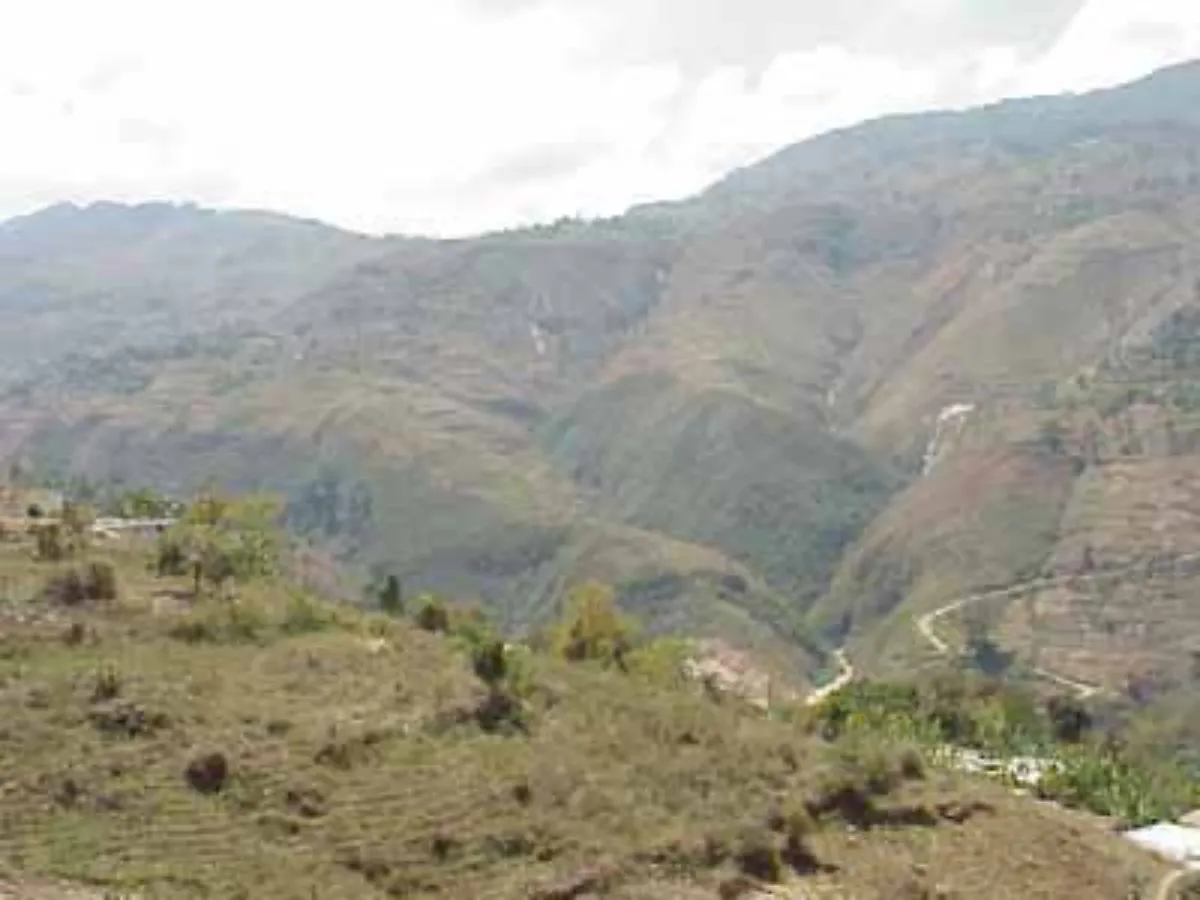
Geographically, Haiti is located in the western third of the island of Hispaniola in the Caribbean. This area is mountainous and isolated with very few natural resources. Farming is difficult and yields are just enough to sustain life of those working and their families. The few trees available have been cut for cooking and heating fuel. This deforestation has sped up land erosion, increasing the likelihood of flooding and mudslides, especially during the hurricane season. In the rural areas there are very few roads and as a result, some health practitioners must travel on foot, horseback, or more recently, four-wheel-drive vehicles.
In many of the remote rural areas, the only health care available is through traditional healers. These healers are, quite literally, Voodoo doctors – as Voodoo is very influential and a recognized religion throughout all of Haiti. Many believe that sorcery causes sickness and the only way to get well is to visit a healer and have the juju removed. The healer’s examination and use of concoctions and herbs are much less expensive and usually more convenient than conventional medicine and clinics. Though, beyond the cost and convenience, Haitian cultural tradition looks first to healers before later referring to a modern health clinic for additional treatment.
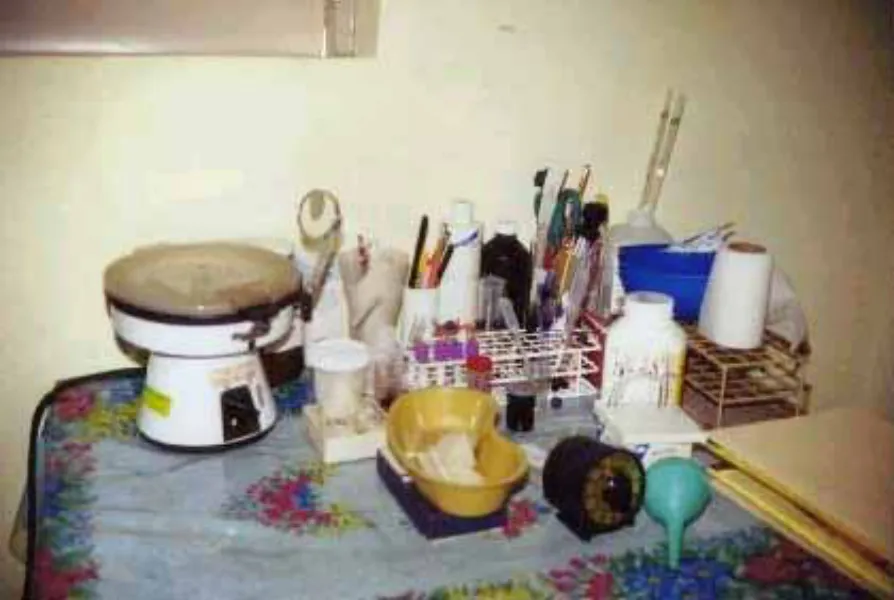
Conventional health workers rely on very fundamental practices to diagnosis and treat their patients. Without access to equipment for chemical or laboratory work, understanding of illness is primarily derived from patient case histories and examination work. There is a large drain on rural areas for this type of care-giver as those individuals that become educated soon move to the city usually taking jobs with private companies and non-governmental organizations. This gap in health care has compounded many of the common health issues found amongst Haitians. These include upper respiratory problems from poor air quality, gastric parasites and malaria from contaminated drinking water and poor sanitation, and other untreatable health problems due to the lack of medical specialists and the infrastructure needed to support required medical equipment.
The infrastructure and state-resources are highly unreliable due to the complex and turbulent nature of Haiti’s political and economic environments. Installation and maintenance of communication and electrical infrastructure are prohibitively expensive in many areas. With approximately an 80% unemployment rate, Haiti is the poorest country in the western hemisphere. Company owners and those in power are socially bound to hire their family members, so the best person for a job will remain unemployed if a family member needs work. Rampant corruption and cronyism has caused a continuous cycle of revolts, military coups, and dictatorships. The politically affiliated control most of the major businesses and those without ties to people in power are forced to pay bribes to get anything accomplished. These factors have prevented the viability of many companies wishing to provide goods, services, and employment to the people of Haiti.
There are more than 250 private radio stations broadcasting music and political messages in both French and Creole, though self-censorship is common to avoid offending sponsors or politicians. Radio is Haiti’s most important information medium since few people are able to read newspapers or afford televisions. Telephones are available in major cities, though the poor implementation causes many dropped calls and disconnected lines. Two cell phone providers were started by associates of former president Jean-Bertrand Aristide, though despite any availability, most people in Haiti are unable to use cell phones. Many carry them around, but the devices are merely status symbols as the maintenance, batteries, and service, like the infrastructure to support them, are too expensive. Communication in Haitian culture is highly oral, so phone usage would seem to be popular. What the phone does not afford are the animated physical expressions and body language that the people rely on in face-to-face conversations. This behavioral communication pattern, the low literacy rate, and the Haitian propensity to learn by observation, could create a cultural accepted opportunity for photography to be a powerful tool.
Traditional film photography resources are available including film and businesses providing development services. While not many Haitians can afford cameras and supplies, the people of Haiti are very open to having their picture taken. Their attitude toward the photo-process is very formal – most stand very plainly with their hands at their sides and do not smile. The political culture of Haiti is not as accepting of photography. Officials are suspicious of how photos will be used and many times journalists have had equipment confiscated while photographing police, airports, military and political executives.
Methodology
The study is divided into four phases outlining initial observations, technological setup, data collection, and analyzation.
Phase 1 will begin with establishing a partnered association with a United States medical facility to receive, diagnosis, and return information sent from the Haitian community. An outlying area of Port au Prince, Haiti will be chosen to observe the local population and their activity as it relates to local health care. This site will, in turn, be the community where the telemedicine system will be implemented. The state of the current medical infrastructure, specifically communications, and required arrangements will be documented for use in Phase 2. The PIs will extend the established background understanding of current diagnosis practices, level of technology, and methods that could be displaced a by telemedicine system. Based on these observations, the PIs will attempt to predict how the varying influences will help or hinder the adoption of a telemedicine system. These predictions will be analyzed against the observed outcomes. This will contribute to future studies that may be conducted and is discussed in the proceeding section.
Phase 2 involves the technical installation and configuring of the telemedicine system within the designated community. The system will be a specialized terminal to be used specifically for activities related to telemedicine. The communications method will be designated based off of the “on the ground” observations made in Phase1. Based upon background research and previous implementations of telemedicine, it is presupposed that a satellite communications link may be required to connect the remote site to a communications infrastructure. Other possibilities of connection could include wireless point-to-point or a dedicated wired network. Once the system infrastructure is in place, an individual already associated with the existing health care clinic will be trained in the use and daily operation of the system. This individual will be identified in Phase 1; traits to be considered are: level of trust held by the community of said individual, level of education, and medical knowledge. It was decided that choosing an individual already established within the local health clinic to operate the system, rather than an individual from the project team, would provide a further level of separation from the researchers and the community to be studied. During this study, the maintenance and upkeep of the telemedicine system outside the bounds of daily use and operation, will be performed by the research team. Training and employment of an individual from the community/country to perform these tasks is a separate issue that will not be addressed in this study.
Phase 3 consists of recording the usage and adoption of the telemedicine system. Within a formalized observational study, a format for data collection must be specified before observations can begin. To give a level of separation from the PI’s personal beliefs and presuppositions, which could influence the collected data, an approach to data collection that allows for multiple interpretations of the data should be utilized. To this end, two general categories of Actors and Artifacts are specified. Individuals, groups, and organizations will be designated as Actors. The telemedicine system and other devices that relate to medical communication/interaction and diagnosis will be designated as Artifacts. The observations made will document the communications and interactions between the Actors and Artifacts. The outcome of this rational is a web of interactions linking the all various Actors and Artifacts. By generalizing the data in this way, it will allow for different frameworks to be applied in order to explain the observed behavior. Data will be collected through a combination of passive observation, active questioning, and individual interviews with the study’s participants.
Phase 4 comprises the analyzation of the collected observations. The results will be analyzed against the initial outlined categories of Technical/Economic Infrastructure of the country, Political Environment, Geography and Ecological Environment, Education Level of the participants, and the Cultural beliefs of the local Populace. During this phase it is expected that these categories may be further refined and that new categories may be added. Various methodologies exist to explain human centered computing behavior. This study does not attempt to develop a new theory to explain the observed behavior, but will utilize existing models to account for the observations. The academically accepted models of Distributed Cognition, Activity Theory, and Situated Action will be applied to the observations. From the literature review conducted by the PIs, each of these models have been used to explain situations involving human centered computing and human behavior. The PIs will determine which specific theory best explains the recorded behavior. It is important to note from the PI’s personal experience and observations, that none of the outlined theories may give a full and complete explanation of the recorded behavior. Further research (within the scope of this study) may be conducted to determine a more sufficient framework of understanding. This may include using Distributed Cognition to explain the observed behavior in one situation while using Activity Theory to explain a different situation. Once a suitable framework for explanation is found, a preliminary model to implement a telemedicine system within Haiti will be constructed.
Discussion/Future Work
A developing country with inadequate medical access and resources, such as Haiti, would greatly benefit from a countrywide telemedicine implementation. Cultural and social beliefs would need to be accounted for when developing and implementing such a system. Practical considerations for a countrywide deployment (communication, power, etc…) would need to be addressed on a scope far exceeding this study, for proper implementation to occur. The PIs feel that these hindrances are not indefinite and therefore, it is only a matter of time before such an implementation could occur. Once the proper infrastructure is in place, having a model that considers the cultural and social factors of the adoption of a telemedicine system by the local populace, would facilitate a proper and timely implementation.
It is hoped that a secondary study may be conducted to further refine the preliminary model developed in this study. The PIs assert that the predictions made concerning system adoption in Phase 1, along with the observations that will either validate or invalidate said predictions, will be useful in more accurately identifying and predicting influencing factors that would affect system adoption in a secondary study. A secondary study incorporating these results as well as other “lessons learned” would allow for further refinement of a model for telemedicine implantation in Haiti.
It is also hypothesized that the model developed within this study may give insight for exploring the use of digital images in other forms of communication; specifically teleagriculture and as of yet unidentified uses of digital photography as a communication medium.
References
Fraser H, McGrath SJ. Information technology and telemedicine in sub-Saharan Africa. BMJ 2000; 321: 465-466.
Grigsby J, Sanders JH. Telemedicine: Where it is and where it’s going. Ann Intern Med. 1998; 129:123-127.
Halverson, C.A. Activity theory and distributed cognition: Or what does CSCW need to DO with theories? Computer Supported Cooperative Work 11, 2002: 243–267.
Hamish S F Fraser, et al. An information system and medical record to support HIV treatment in rural Haiti. BMJ 2004; 329:1142-1146.
Hutchins, E. How a cockpit remembers its speeds. Ms. La Jolla: University of California, Department of Cognitive Science, 1991.
Jhunjhunwala, A., Ramachandran, A., & Bandyopadhyay, A. N-logue: The story of a rural service provider in India. Journal of Community Informatics, 1(1), 2004; 30-38.
Kirkman, G. ‘Out of the Labs and Into the Developing World—Using Appropriate Technologies to Promote Truly Global Internet Diffusion’. Background Paper for the United Nations Development Programme’s Human Development Report 2001: Changing Technology for Human Development.
Kuutti, K. Activity theory as a potential framework for human-computer interaction research, in Nardi, B. (ed.) (1996): Context and Consciousness, MIT Press, p. 25.
Nardi, B. “Studying Context: A Comparison of Activity Theory, Situated Action Modelsand Distributed Cognition” to appear in B. Nardi (ed.): Context and Consciousness: Activity Theory and Human Computer Interaction, MIT Press, Cambridge, MA, 1995.
Perednia DA, Allen A. Telemedicine Technology and Clinical Applications. JAMA 1995; 273: 483-488.
Wright D. Telemedicine and developing countries. A report of study group 2 of the ITU Development Sector. J Telemed Telecare 1998; 4(suppl 2):1–87.
Contacts
Gail Bingham, Program Manager, International Health Ministries, Presbyterian Church USA
Reverend Robert Ellis, MDiv, MPH, Coordinator of International Health Ministries, Presbyterian Church USA